







What's Happening?
Los Angeles County has reported its first West Nile virus-related death of the year, a San Fernando Valley resident who developed neurological complications from a severe infection. This fatality comes as California experiences a five-year high in West Nile virus activity.
Statewide, there have been 30 human cases and three deaths as of last week, according to the California Department of Public Health. The L.A. Public Health Department has identified 15 infections this year, with approximately half occurring in the San Fernando Valley. The surge in mosquito activity, which began almost two months earlier than usual, is attributed to an abnormally warm winter and a blistering March heatwave. Surveillance testing indicates that 24% of dead birds and 8 out of 1,000 mosquitoes are testing positive for the virus statewide, compared to five-year averages of 13% and 5 out of 1,000, respectively.
Why It's Important?
The increase in West Nile virus cases and the first fatality in Los Angeles County highlight a significant public health concern, particularly for vulnerable populations. The disease can be deadly, especially for individuals over 60, and those with underlying conditions such as diabetes, high blood pressure, chronic kidney disease, or compromised immune systems. The early onset and widespread activity of the virus this year suggest a heightened risk to the general public. The lack of a specific treatment or vaccine for West Nile virus underscores the importance of preventive measures. This situation also points to broader implications of climate change, as epidemiologists warn that rising global temperatures are contributing to the northward migration and increased prevalence of pathogens and insects, potentially leading to more frequent and severe outbreaks of mosquito-borne diseases in the future.
What's Next?
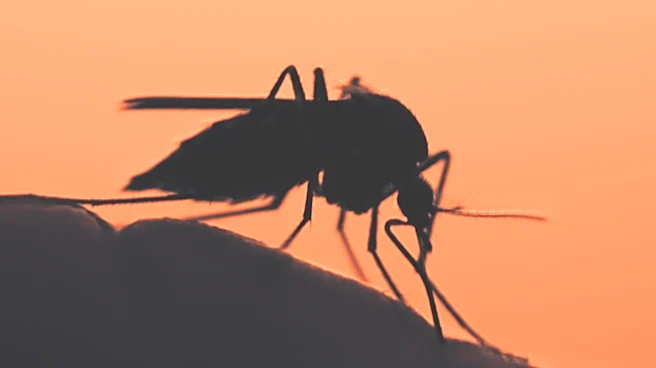
L.A. County Health Officer Muntu Davis has urged residents to take immediate precautions to reduce their risk of infection. These measures include using DEET-containing insect repellent, eliminating sources of standing water where mosquitoes breed, and ensuring windows and doors have tight-fitting screens. Public health officials emphasize that August and September are typically peak periods for West Nile virus transmission, making continued vigilance crucial. The Greater Los Angeles County Vector Control District will likely continue its surveillance and control efforts. Residents, especially those at high risk, are advised to be particularly cautious outdoors during dusk and dawn, when mosquito activity is highest. Ongoing monitoring of mosquito populations and virus prevalence will be essential to track the progression of the outbreak and inform future public health advisories.
Beyond the Headlines
The current West Nile virus surge in California serves as a stark reminder of the interconnectedness between environmental changes and public health. The attribution of the early and widespread mosquito activity to an abnormally warm winter and a March heatwave underscores the growing impact of climate change on disease patterns. This trend suggests that communities may need to adapt to longer and more intense mosquito seasons, requiring sustained public health campaigns and vector control efforts. The situation also highlights potential disparities in health outcomes, as vulnerable populations are disproportionately affected by severe infections. Beyond immediate health concerns, the ongoing challenge of mosquito-borne diseases could necessitate increased investment in climate change mitigation, public health infrastructure, and research into new prevention and treatment strategies to safeguard communities against future outbreaks.