






What's Happening?
A proposed framework for a ceasefire deal between the U.S. and Iran includes a 60-day truce, reopening the Strait of Hormuz, and reviving talks on limiting Iran's nuclear program. The deal would allow Iran to sell oil freely and require the clearing of mines
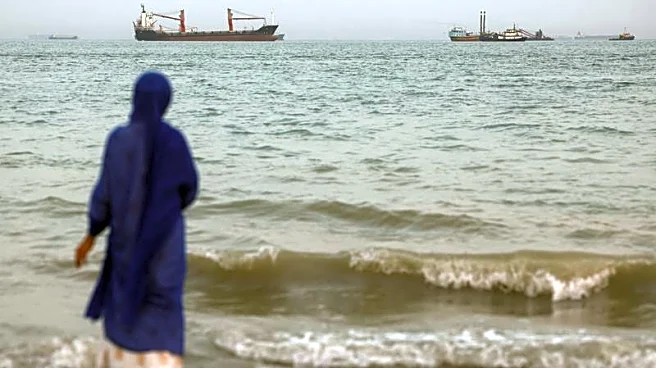
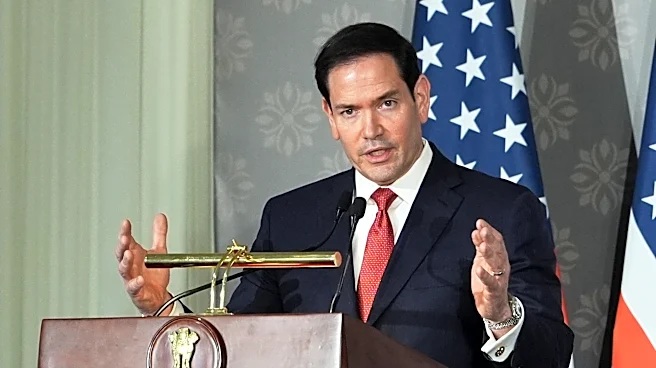
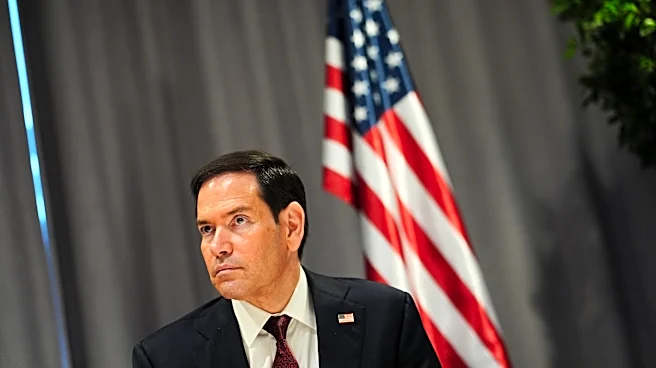
in the strait, with the U.S. lifting its blockade on Iranian ports. U.S. Secretary of State Marco Rubio stated that the deal could achieve a completely open Strait of Hormuz without tolls. However, Iranian media reported that the strait would remain under Iranian control. The deal also involves unfreezing some Iranian assets held in banks outside Iran and halting hostilities on all fronts, including Israel and Lebanon. A senior Iranian source indicated that Tehran had not agreed to hand over its highly enriched uranium stockpile, contradicting earlier reports.
Why It's Important?
The proposed ceasefire deal could significantly impact regional stability and international relations. Reopening the Strait of Hormuz is crucial for global oil supply, as it is a major transit route for oil shipments. The deal's success could lead to a reduction in tensions between the U.S. and Iran, potentially easing geopolitical risks in the Middle East. However, the lack of agreement on Iran's enriched uranium stockpile and the control of the Strait of Hormuz highlight ongoing challenges in reaching a comprehensive resolution. The outcome of these negotiations could influence U.S. foreign policy and its approach to nuclear non-proliferation.
What's Next?
The U.S. and Iran are expected to continue negotiations to finalize the details of the ceasefire deal. The international community will be closely monitoring the situation, as the agreement's success could have far-reaching implications for global security and economic stability. The potential lifting of the U.S. blockade on Iranian ports and the unfreezing of Iranian assets could lead to improved economic conditions in Iran, potentially influencing domestic and regional dynamics.