






What's Happening?
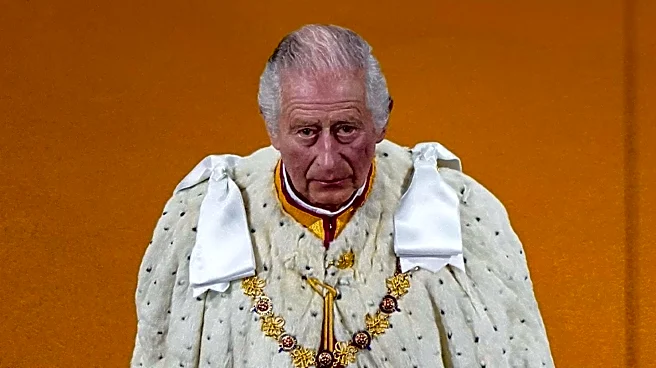
King Charles III is expected to play a role in safeguarding the city status of Preston and Lancaster, two areas in the UK facing potential loss of their titles due to upcoming council reorganizations. Officials in both cities have been informed that their city status will
likely be protected through 'letters patent,' which are legal documents authorized by the King. This intervention comes as Lancashire's 15 main councils are slated for abolition and replacement by a smaller number of streamlined authorities by 2029. Preston, which gained city status in 2002, and Lancaster, a city since 1937, are at risk of surrendering their titles if they become part of larger councils without such protection. The Local Democracy Reporting Service highlighted that this measure aims to prevent a situation similar to Rochester, Kent, which inadvertently lost its city status in 1998 after failing to appoint necessary trustees when it merged into a new council.
Why It's Important?
The potential intervention by King Charles III underscores the cultural and historical significance of city status within the UK. For Preston and Lancaster, retaining their city titles is crucial for maintaining their distinct identities, civic pride, and potentially their economic appeal. City status often brings a sense of prestige that can influence tourism, investment, and local community morale. The precedent of Rochester losing its status serves as a cautionary tale, emphasizing the need for proactive measures during administrative changes. The use of letters patent by the monarch highlights a traditional mechanism for preserving such historical designations, ensuring that local government restructuring does not inadvertently erase long-held civic honors. This situation also reflects the broader challenges faced by communities during large-scale governmental reforms, where local identity can be overlooked in favor of administrative efficiency.
What's Next?
The immediate next steps involve the formalization of the protection through letters patent authorized by King Charles III. While the decision to reorganize Lancashire's councils has seen some reversals and reassessments, with ministers currently reviewing five alternative council structures, the intent to protect Preston and Lancaster's city status remains. Council leaders, such as Matthew Brown of Preston City Council and Caroline Jackson of Lancaster City Council, have expressed strong support for this protective measure, viewing it as vital for their cities' future. The ongoing governmental overhaul of Lancashire's local authorities is expected to proceed, with new councils likely to be established by 2029. The successful implementation of these letters patent will ensure that regardless of the final administrative structure, Preston and Lancaster will retain their city titles, preserving their historical and civic identities.
Beyond the Headlines
This situation extends beyond mere administrative changes, touching upon the enduring role of the monarchy in preserving national heritage and local identity. The use of royal prerogative through letters patent demonstrates a continuity of historical governance in modern administrative contexts. It highlights a tension between the drive for governmental efficiency through consolidation and the desire to maintain distinct local identities and traditions. The case also brings to light the often-complex legal and historical nuances associated with civic titles, which can be easily lost if not explicitly protected during periods of structural change. This event could set a precedent for how other historical designations are handled in future local government reorganizations across the UK, reinforcing the idea that cultural heritage holds significant value alongside administrative practicality.