




What's Happening?
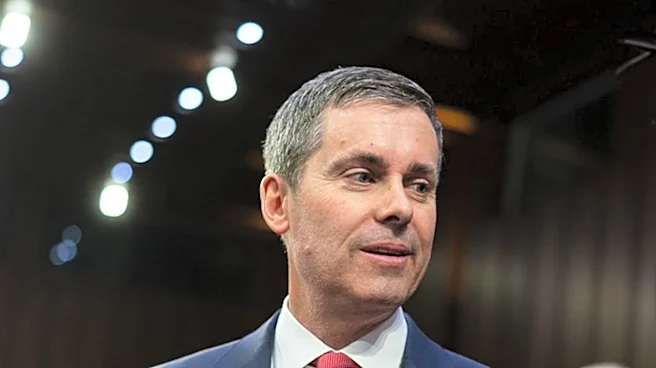
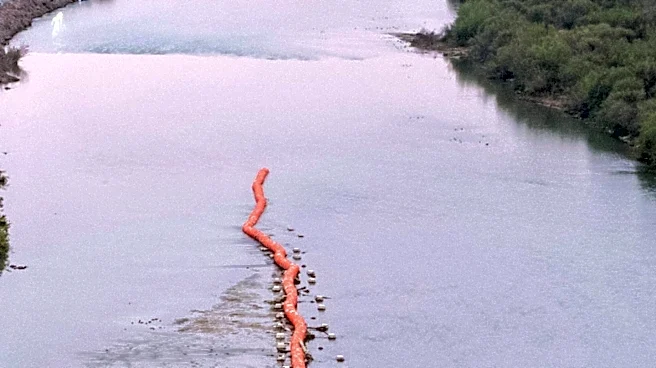
Hundreds of federal border buoys were dislodged during recent flooding in the Rio Grande, causing them to drift downstream and leading to the temporary closure of international bridges in Eagle Pass. Congressman Henry Cuellar criticized the Department
of Homeland Security and contractors for failing to secure the buoys despite assurances that they would withstand flooding. The situation has been described as embarrassing, with Cuellar emphasizing the need for contractors to heed local warnings about rising floodwaters. The incident has raised questions about the environmental impact of the loose buoys and potential legal responsibilities.
Why It's Important?
The dislodging of federal border buoys during flooding events highlights significant concerns about infrastructure security and environmental impact. The incident underscores the need for effective disaster preparedness and response strategies to protect critical infrastructure. The economic implications are considerable, as disruptions to border crossings can affect trade and local economies. Additionally, the environmental consequences of loose buoys drifting into different territories could lead to diplomatic and legal challenges. This event may prompt a reevaluation of current infrastructure management practices and the accountability of contractors involved in maintaining such systems.
What's Next?
There is likely to be an investigation into the failure to secure the buoys and the subsequent impact on infrastructure and the environment. Congressman Cuellar has called for accountability from contractors and the Department of Homeland Security. Future steps may include revising contracts and protocols to ensure better preparedness for natural disasters. Environmental assessments may be conducted to evaluate the impact of the buoys on the river ecosystem. Stakeholders, including government agencies and environmental groups, may push for policy changes to enhance infrastructure resilience and environmental protection.