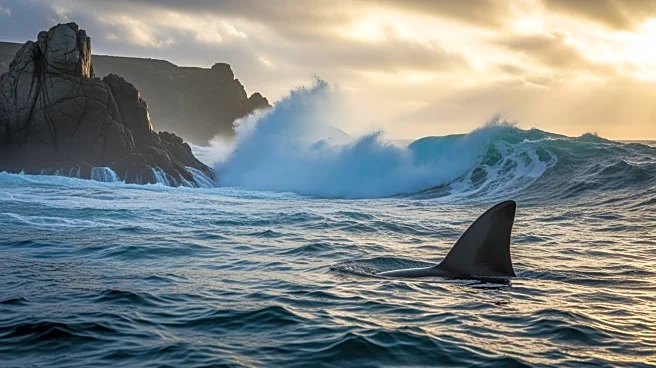

What's Happening?
In a span of 48 hours, four shark attacks occurred along a 15-kilometer stretch of Australia's east coast, raising alarm among local and international communities. The incidents involved a 12-year-old
boy and a man who were critically injured, and two other individuals who sustained less severe injuries. These attacks have led to the closure of several beaches as authorities and experts assess the situation. Shark researcher Chris Pepin-Neff described the series of attacks as unprecedented in his 20 years of research. Experts suggest that recent heavy rainfall, which created ideal conditions for bull sharks, may have contributed to the increased shark activity. The rain likely flushed nutrients into the sea, attracting bait fish and, consequently, sharks.
Why It's Important?
The surge in shark attacks has reignited debates over how to manage shark populations and ensure public safety. While some advocate for shark culls, experts argue that such measures are ineffective and do not address the root causes of shark encounters. Instead, they emphasize the need for better understanding of shark behavior and environmental conditions that lead to increased shark activity. The situation highlights the complex relationship between humans and marine life, and the challenges of balancing safety with conservation efforts. The economic impact on local tourism and beach activities could be significant if public fear persists.
What's Next?
Authorities and experts are likely to continue monitoring shark activity and environmental conditions to prevent further incidents. There may be increased efforts to educate the public on how to safely enjoy the ocean, such as avoiding swimming after heavy rain. Local governments might consider implementing more shark enclosures or other safety measures. The debate over shark culling is expected to continue, with conservationists advocating for non-lethal solutions. The situation could lead to policy changes regarding beach safety and marine life management.
Beyond the Headlines
The recent shark attacks underscore the need for a broader discussion on human interaction with marine ecosystems. As coastal populations grow and water sports become more popular, the likelihood of human-shark encounters may increase. This situation calls for a reevaluation of how society perceives and interacts with the ocean, recognizing it as a wild environment with inherent risks. The events also highlight the importance of maintaining ecological balance and the potential consequences of disrupting marine habitats.