
What's Happening?
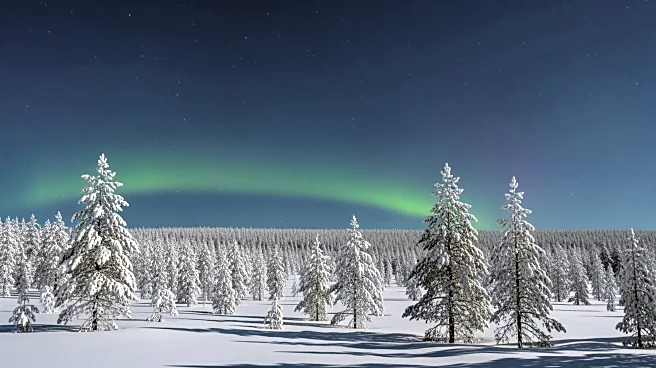
The National Oceanic and Atmospheric Administration (NOAA) has issued a forecast indicating subdued northern lights activity for December 25, 2025. The Space Weather Prediction Center's 3-day forecast shows
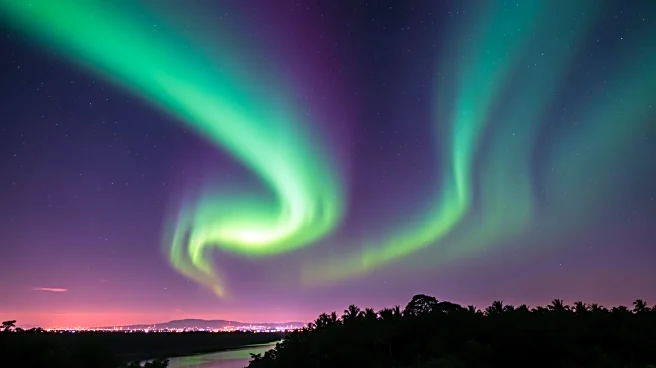
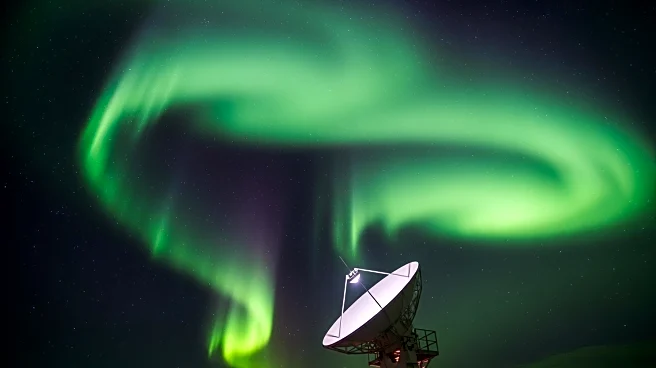
a Kp value of 3.67, which is below the threshold for geomagnetic storms, suggesting minimal aurora activity. This forecast is particularly relevant for mid-latitude regions, where the visibility of the aurora borealis is expected to be low. Despite the low activity forecast, skywatchers in high-latitude areas are advised to stay alert for any potential aurora displays, especially between 10 p.m. and 4 a.m. local time, when conditions are typically more favorable for viewing.
Why It's Important?
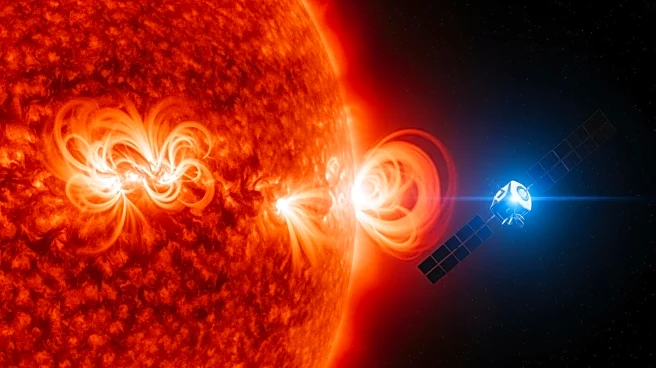
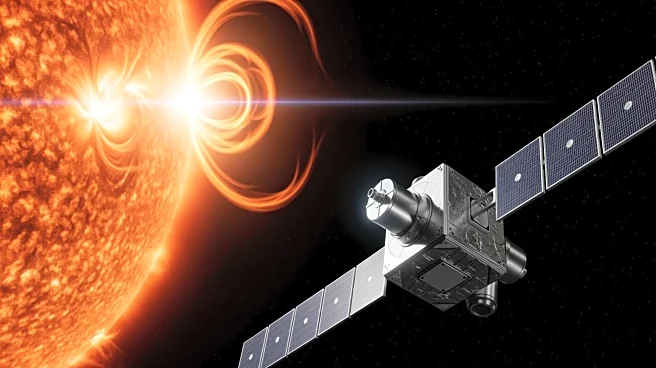
The northern lights, or aurora borealis, are a significant natural phenomenon that attracts interest from both scientists and the general public. The subdued forecast for Christmas night may impact tourism and local economies in regions that typically benefit from aurora-related activities. Additionally, the forecast serves as a reminder of the complex interactions between solar activity and Earth's magnetic field, which can have broader implications for satellite communications and power grids. Understanding these interactions is crucial for developing strategies to mitigate potential disruptions caused by geomagnetic storms.
What's Next?
Skywatchers and aurora enthusiasts are encouraged to monitor updates from NOAA and other space weather agencies for any changes in the forecast. In the event of increased solar activity, alerts may be issued, providing opportunities for viewing the northern lights. Researchers will continue to study the solar wind and its effects on Earth's magnetosphere to improve predictive models and enhance our understanding of space weather phenomena.