
What's Happening?
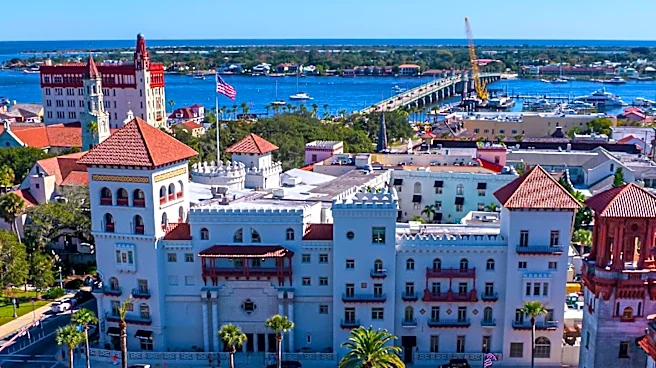
St. Augustine, Florida, is clarifying common myths and legends associated with its long history, distinguishing between historical facts and popular folklore. The city, founded in 1565, has accumulated
numerous stories over centuries, many of which have become more dramatic or appeared long after the events. For instance, the perception of pirates roaming every corner of St. Augustine is largely a misconception; while the city was a strategic Spanish settlement and a target for privateers like Sir Francis Drake in 1586 and buccaneer Robert Searle in 1668, it was not a pirate stronghold. Privateers operated under government commissions during wartime, unlike pirates who acted independently for personal gain. Another prevalent myth is the Fountain of Youth, which historians note was not mentioned in contemporary records of Juan Ponce de León's 1513 voyage, with its connection emerging much later. The site was originally a Timucua village with a freshwater spring, later used by Spanish settlers. Similarly, the idea of a citywide network of underground tunnels lacks archaeological or historical support, with most 'tunnels' being individual spaces like cisterns or cellars. The Castillo de San Marcos, often believed to be impenetrable, faced major sieges in 1702 and 1740 but was never captured by force, and its coquina walls were advantageous due to their ability to absorb cannon fire.
Why It's Important?
The clarification of St. Augustine's historical narratives is important for several reasons. Firstly, it promotes historical accuracy, ensuring that visitors and residents understand the true events that shaped the nation's oldest continuously inhabited European-established settlement. This distinction helps preserve the integrity of historical education and research, moving beyond romanticized or exaggerated tales. Secondly, by debunking myths such as the widespread presence of pirates or the Fountain of Youth, the city can highlight its actual historical significance, including its role as a fortified Spanish outpost and its unique architectural and cultural heritage. This nuanced understanding can enrich the visitor experience, encouraging a deeper appreciation for the archaeological discoveries and documented history, rather than solely focusing on folklore. Furthermore, understanding the true nature of events, like the resilience of the Castillo de San Marcos's coquina construction, provides valuable insights into historical engineering and defense strategies, which are often overshadowed by popular but inaccurate narratives.
What's Next?
St. Augustine will likely continue its efforts to educate the public on the distinctions between its historical facts and popular legends. This may involve ongoing initiatives by local museums, historical landmarks, and tour operators to present more accurate historical accounts. Educational programs and exhibits at sites like the Fountain of Youth Archaeological Park and the Castillo de San Marcos will likely emphasize documented history while acknowledging the cultural impact of the legends. The city's tourism sector may adapt its marketing to highlight the authentic historical experiences, such as exploring archaeological sites and understanding the strategic importance of the Spanish colonial era, alongside the entertaining aspects of local folklore. Researchers and archaeologists will continue to uncover new details about the city's past, further refining the historical narrative and potentially challenging existing beliefs. The ongoing dialogue between historical fact and popular imagination will remain a dynamic aspect of St. Augustine's identity, influencing how its story is told and perceived by future generations.
Beyond the Headlines
The ongoing effort to differentiate historical fact from folklore in St. Augustine reflects a broader societal trend towards critical engagement with historical narratives. This initiative highlights the ethical responsibility of historical institutions to present accurate information, even when popular myths are deeply ingrained in public consciousness. The persistence of legends like the Fountain of Youth or widespread pirate activity underscores the human desire for compelling stories, often leading to the embellishment or simplification of complex historical events. This dynamic raises questions about how history is consumed and interpreted, particularly in tourist-driven economies where romanticized versions of the past can be more appealing. The city's approach demonstrates a commitment to intellectual honesty, encouraging visitors to appreciate the genuine struggles, innovations, and daily lives of past inhabitants, which are often more profound than fictionalized accounts. This process also contributes to a more mature understanding of national history, acknowledging the complexities and nuances that shape a place's identity over centuries.