





What's Happening?
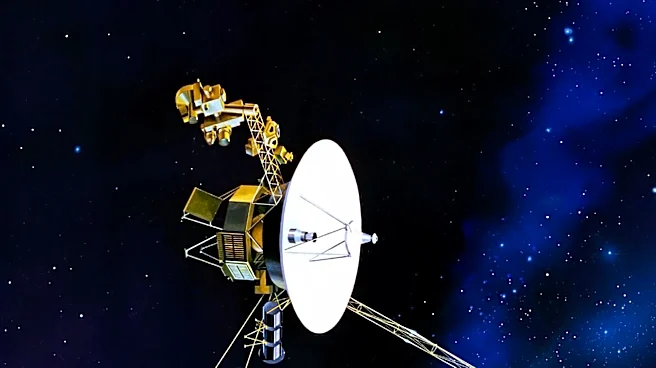
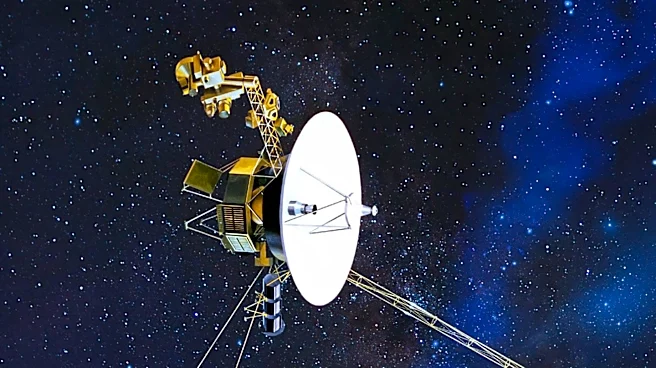
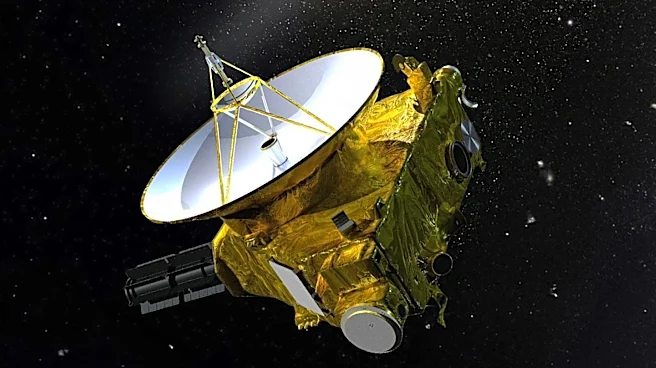
NASA's New Horizons spacecraft is on the verge of reaching the outer limits of the heliosphere, the vast magnetic bubble created by the Sun, marking a significant milestone in space exploration. After its successful mission to Pluto and the Kuiper Belt,
New Horizons is now approaching the heliopause, where the solar wind meets interstellar space. Recent studies suggest that this crossing could occur as early as 2029 or as late as 2040. The spacecraft, currently 66 astronomical units from the Sun, is entering a region where new measurements could reshape our understanding of the Sun's influence and the boundary of the solar system.
Why It's Important?
The heliosphere acts as a protective shield for the solar system, deflecting much of the energetic radiation from interstellar space. Understanding its dynamics is crucial for planning future interstellar travel and for comprehending the Sun's influence on the solar system. New Horizons' journey offers a rare opportunity to study the heliosphere's boundary, a region previously crossed only by Voyager 1 and Voyager 2. The data collected by New Horizons will provide fresh insights into the interaction between the solar wind and interstellar material, potentially leading to a deeper understanding of the solar system's outermost regions and the nature of interstellar space.
What's Next?
As New Horizons continues its journey, scientists are refining models to predict when the spacecraft will encounter the termination shock, a critical region where the solar wind slows down. The mission's success will depend on the ability to capture and analyze data as the spacecraft crosses this boundary, which may happen multiple times due to the heliosphere's dynamic nature. The findings from New Horizons will be compared with those from the Voyager missions, offering a comprehensive view of the heliosphere's behavior under different solar conditions. This research will enhance our understanding of the Sun's outermost reach and inform future missions exploring the interstellar medium.