
What's Happening?
President Donald Trump has intervened in the ongoing conflict between Israel and Hezbollah in Lebanon, aiming to prevent further escalation. Israeli Prime Minister Benjamin Netanyahu had announced plans
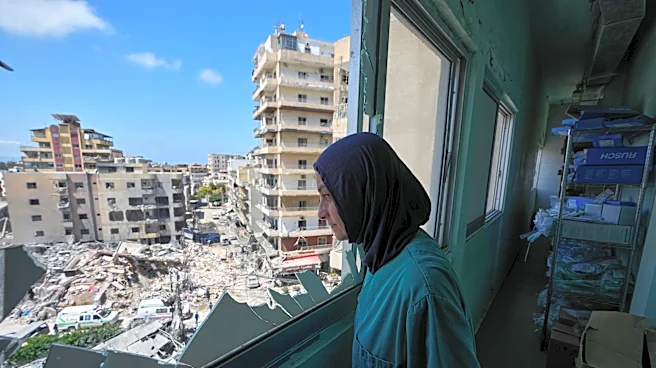
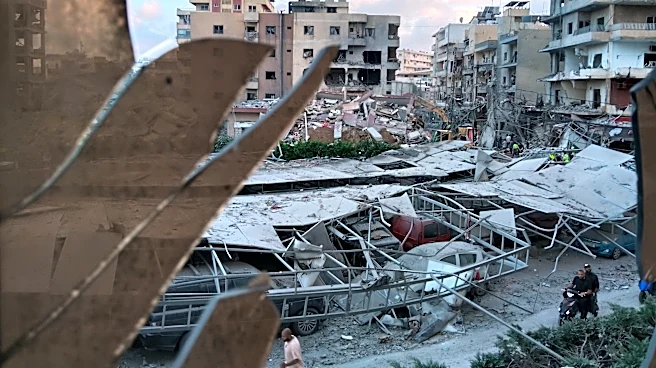
to strike Hezbollah targets in Beirut, but following a heated call with President Trump, the operation was shelved. Trump emphasized that Israeli troops would not move on Beirut, and any troops en route were turned back. Despite the ceasefire with Iran, Israel has continued strikes in southern Lebanon, with Netanyahu under pressure to escalate the conflict due to Hezbollah's attacks on Israeli cities. The situation remains tense as Israel maintains its offensive in southern Lebanon, while Hezbollah has agreed to a U.S. proposal for a ceasefire, halting attacks on Israel in exchange for a cessation of Israeli strikes on Beirut.
Why It's Important?
The intervention by President Trump is significant as it highlights the U.S.'s role in Middle Eastern geopolitics and its influence over Israeli military decisions. The conflict between Israel and Hezbollah has broader implications for regional stability, particularly with Iran's involvement. The potential closure of strategic maritime routes like the Bab al-Mandab strait could disrupt global trade, emphasizing the economic stakes. Trump's actions may prevent immediate escalation, but the underlying tensions remain, affecting U.S.-Israeli relations and the broader geopolitical landscape. The situation also impacts domestic politics in Israel, with Netanyahu facing pressure to act decisively amid an upcoming election.
What's Next?
The next steps involve monitoring the ceasefire agreement between Israel and Hezbollah, as well as the ongoing negotiations between the U.S. and Iran. The situation in Lebanon remains volatile, with potential for renewed conflict if the ceasefire fails. Political leaders in Israel and the U.S. will likely continue diplomatic efforts to stabilize the region. The upcoming Israeli election adds another layer of complexity, as Netanyahu's handling of the conflict could influence voter sentiment. The international community will be watching closely for any shifts in policy or military actions that could alter the current dynamics.
Beyond the Headlines
Beyond the immediate conflict, the situation raises questions about the long-term impact of U.S. foreign policy in the Middle East. The ethical implications of military interventions and the humanitarian consequences for civilians in Lebanon are significant. The role of international diplomacy in resolving such conflicts is crucial, as is the need for sustainable peace solutions. The ongoing tensions also reflect broader cultural and historical divisions in the region, which continue to challenge efforts for reconciliation and stability.