



What's Happening?
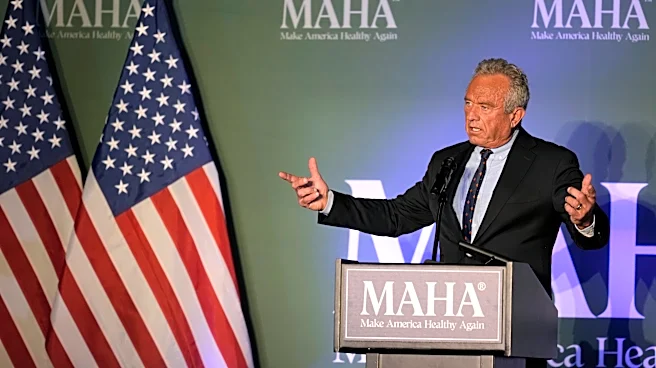
Stephen Miller has been appointed as the White House chief of staff, a move that has reportedly revitalized the agenda of Health Secretary Robert F. Kennedy Jr. and his 'Make America Healthy Again' (MAHA) initiative. This development comes despite recent
midterm election losses for Republicans, where Democrats gained control of both the House and Senate. According to Kennedy, the Senate's leverage over him has diminished with Miller's appointment. Stefanie Spear, Kennedy's principal deputy chief of staff, has indicated that Miller's strong support for MAHA signals a period of intensified action for the department. This internal shift within the White House is seen as a significant boost for Kennedy's health-related policies and objectives.
Why It's Important?
The appointment of Stephen Miller as White House chief of staff and his subsequent support for Health Secretary Robert F. Kennedy Jr.'s 'Make America Healthy Again' agenda carries significant implications for U.S. public health policy. With Miller's influence, Kennedy's initiatives, which may have faced challenges in a divided Congress, are now expected to gain momentum. This could lead to a re-prioritization of health policies, potentially impacting healthcare access, medical research funding, and public health campaigns across the nation. Stakeholders in the healthcare industry, including pharmaceutical companies, insurance providers, and medical organizations, could experience shifts in regulatory environments and funding opportunities. The renewed focus on MAHA, particularly after midterm election losses, suggests a strategic effort by the administration to advance its health agenda through executive action and internal White House support, potentially bypassing congressional opposition.
What's Next?
With Stephen Miller's strong backing, Health Secretary Robert F. Kennedy Jr. is expected to accelerate the implementation of the 'Make America Healthy Again' (MAHA) agenda. This could involve new policy directives, increased departmental focus on specific health initiatives, and potentially a more aggressive stance on health-related regulations. The Democratic-controlled House and Senate are likely to scrutinize these efforts, potentially leading to legislative challenges or oversight hearings. However, with Miller as chief of staff, the White House may seek to advance its agenda through executive orders or administrative actions, limiting congressional interference. Businesses in the healthcare sector should anticipate potential shifts in policy and regulatory enforcement, while public health organizations may see changes in funding priorities and program emphasis. The coming months will likely reveal the specific policy directions Kennedy's department will pursue under this reinvigorated leadership.
Beyond the Headlines
The elevation of Stephen Miller to White House chief of staff and his enthusiastic support for Health Secretary Robert F. Kennedy Jr.'s 'Make America Healthy Again' agenda could signal a broader shift in the administration's approach to policy implementation, particularly in the face of a divided Congress. This move suggests a strategy to consolidate power within the executive branch and push through key initiatives with less reliance on legislative cooperation. Ethically, this raises questions about the balance of power and the role of executive influence in shaping national policy, especially in critical areas like public health. Culturally, a reinvigorated MAHA agenda could lead to increased public discourse and potential polarization around health-related issues, depending on the specific policies pursued. The long-term implication could be a precedent for future administrations to leverage internal White House appointments to circumvent legislative gridlock, potentially altering the traditional checks and balances in U.S. governance.