



What's Happening?
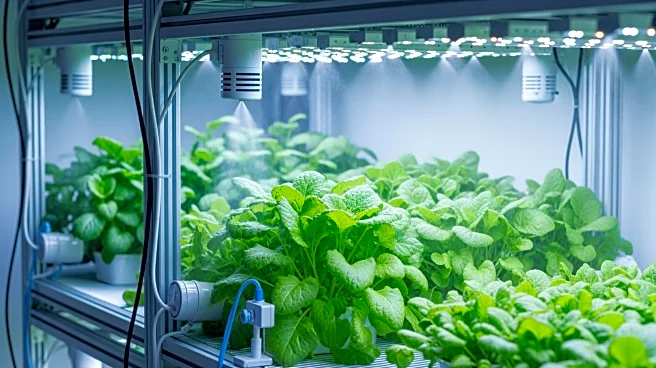
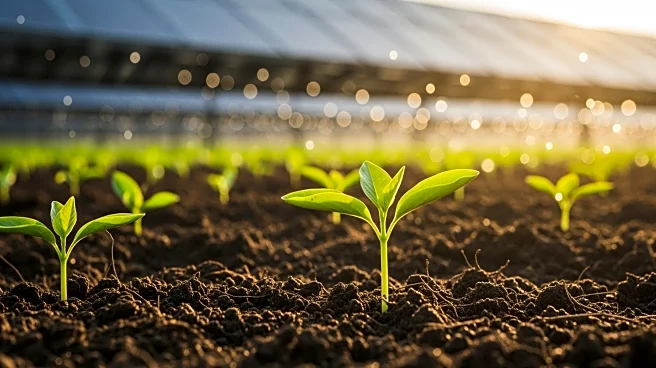
The European Bank for Reconstruction and Development (EBRD) has partnered with Italy to initiate a Sustainable Agriculture Pilot Programme in Egypt, focusing on enhancing the sustainability and resilience of the country's agricultural sector. Italy has contributed
€5 million to the EBRD Small Business Impact Fund to support this initiative, which aims to assist small and medium-sized enterprises (SMEs) in adopting innovative and sustainable technologies. The program addresses the challenges faced by Egyptian agribusinesses, such as high upfront costs and limited access to financing for sustainable investments. It will provide financial support through local banks and offer technical assistance to ensure projects meet environmental criteria. The initiative aligns with the EBRD's strategy to promote a green economy in Egypt and complements Italy's Mattei Plan, which emphasizes sustainable development and climate resilience.
Why It's Important?
This initiative is significant as it addresses the pressing need for modernization in Egypt's agricultural sector, which is crucial for the country's economy but vulnerable to climate change. By supporting SMEs in adopting sustainable practices, the program aims to improve food security, create jobs, and enhance economic resilience. The collaboration between EBRD and Italy highlights the importance of international partnerships in tackling global challenges like climate change and sustainable development. The program also aims to strengthen the capacity of local banks to finance green projects, potentially leading to broader economic benefits and increased competitiveness in the agricultural sector.
What's Next?
The Sustainable Agriculture Pilot Programme will proceed with channeling financing to agribusinesses through local financial institutions, accompanied by technical assistance to guide implementation. The program will incentivize participation by offering financial rewards for projects that achieve measurable environmental benefits. As the initiative progresses, it is expected to foster innovation and productivity in Egypt's agricultural sector, contributing to the country's transition to a green economy. The success of this pilot could lead to expanded efforts and further international collaborations aimed at sustainable development in the region.