





What's Happening?
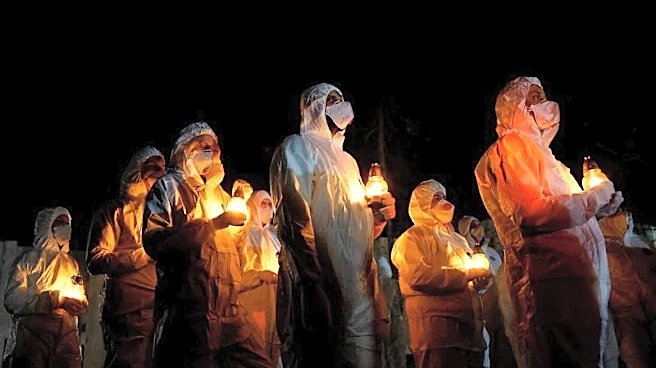
In the city of Slavutych, Ukraine, residents gathered in the early hours to commemorate the 40th anniversary of the Chernobyl nuclear disaster. Despite the ongoing war with Russia and associated curfews, the community came together to honor those who
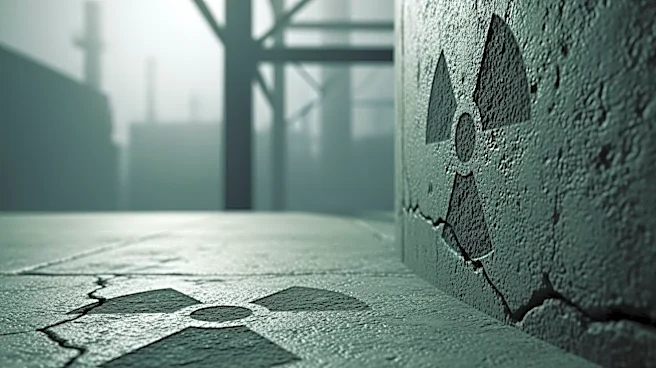
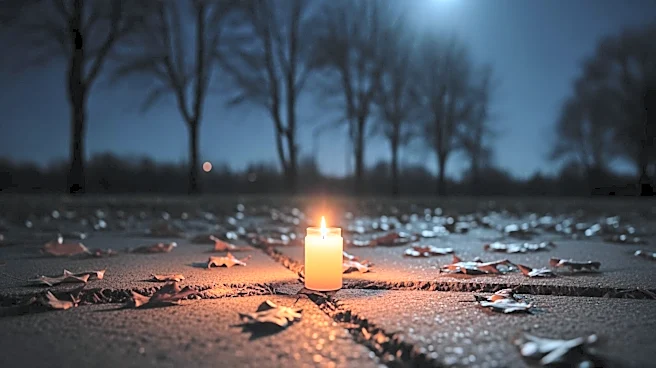
died in the 1986 disaster and the thousands who risked their lives to contain its aftermath. The vigil involved placing candles on a large radiation hazard symbol in the central square. Slavutych, built to house workers from the Chernobyl Nuclear Power Plant, has faced challenges including a brief Russian occupation and harsh winters. The event was marked by poetry and music, with participants dressed in white protective suits symbolizing the 'liquidators' who managed the disaster's immediate aftermath.
Why It's Important?
The vigil underscores the enduring impact of the Chernobyl disaster on Ukrainian society and highlights the resilience of communities like Slavutych. The event serves as a reminder of the historical significance of Chernobyl, which exposed millions to radiation and led to widespread evacuations. It also reflects the ongoing challenges faced by Ukraine amid the war with Russia, including threats to nuclear safety, as evidenced by a recent drone strike damaging the New Safe Confinement structure. The gathering is a testament to the community's commitment to remembering past sacrifices while navigating current geopolitical tensions.
What's Next?
As the war in Ukraine continues, the safety of nuclear sites remains a critical concern. The vigil in Slavutych may prompt further discussions on nuclear security and the protection of vulnerable sites. The international community may increase support for Ukraine's efforts to safeguard its nuclear infrastructure. Additionally, the event could inspire similar commemorations in other affected regions, fostering a broader dialogue on nuclear safety and historical memory.
Beyond the Headlines
The vigil in Slavutych highlights the cultural and emotional ties that communities maintain with their past, even amid conflict. It raises questions about the long-term psychological and social impacts of living in proximity to a site of historical trauma. The event also reflects the broader theme of resilience in the face of adversity, as residents continue to honor their history while confronting new challenges posed by the ongoing war.