
What's Happening?
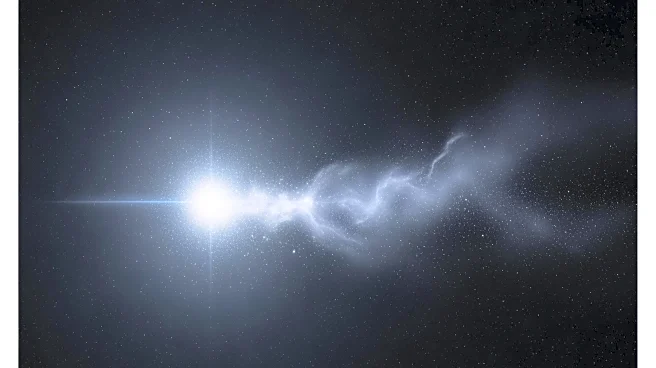
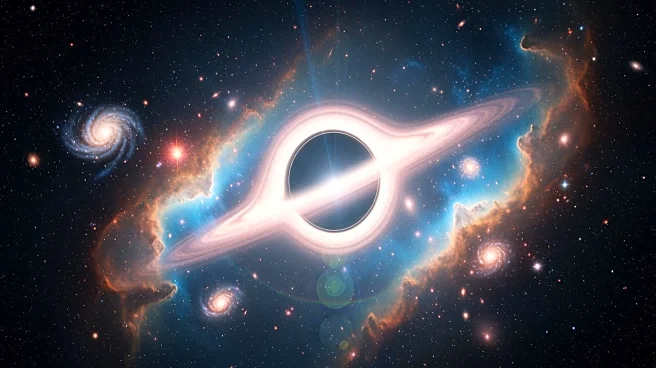
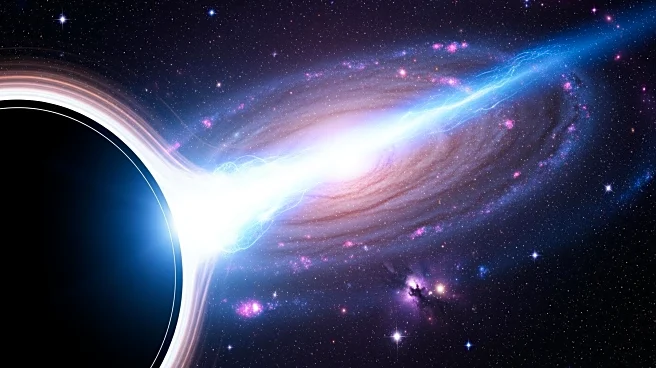
The James Webb Space Telescope (JWST) has revealed a supermassive black hole in the early universe, challenging current models of black hole and galaxy co-evolution. Observations of the galaxy Virgil, seen 800 million years after the Big Bang, show a black hole accreting
material at a rate far exceeding expectations. This discovery suggests that black holes may grow faster than their host galaxies, contradicting previous beliefs that galaxies formed first and nurtured black holes over time. The findings highlight the need to reassess theories of cosmic evolution.
Why It's Important?
The JWST's observations of Virgil provide critical insights into the early universe's dynamics, particularly the growth of supermassive black holes. This challenges existing models and suggests that black holes may play a more dominant role in shaping galaxies than previously thought. The discovery could lead to a reevaluation of how cosmic structures form and evolve, impacting our understanding of the universe's history and the processes that govern it. The findings also underscore the importance of advanced telescopes like JWST in uncovering hidden aspects of the cosmos.