





What's Happening?
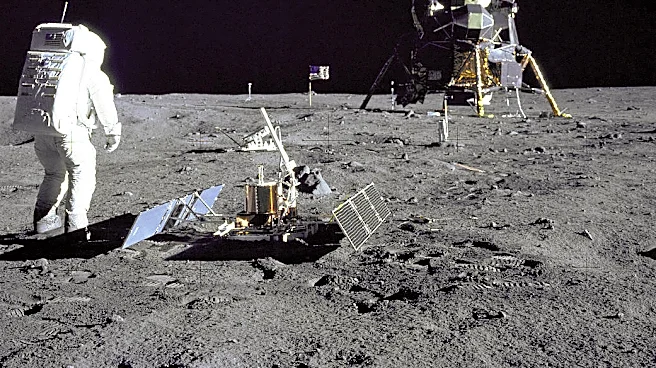
On July 20, 2026, the Moon will appear in the same phase as it did on the day of the Apollo 11 Moon landing, offering a unique observational opportunity. The waxing crescent Moon will rise at 12:52 PM and set at 11:44 PM local time, closely resembling
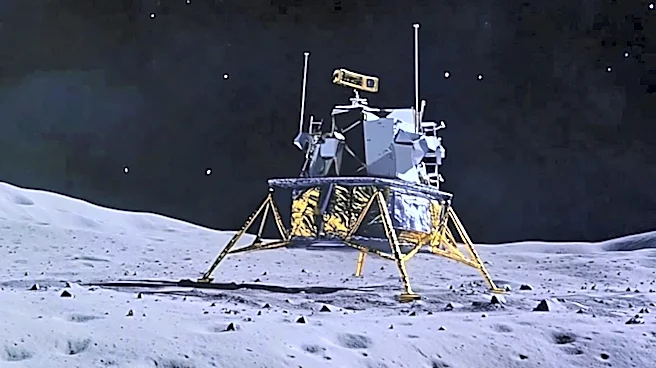
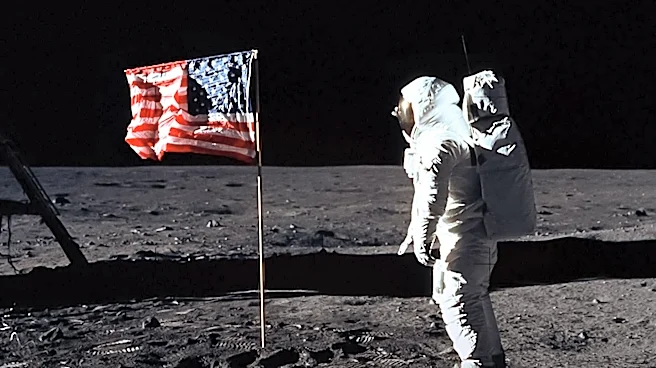
the lunar phase on July 20, 1969, when Neil Armstrong first set foot on the Moon. This event is part of a Metonic cycle, where the Moon's phases repeat on the same calendar date every 19 years. Observers can view the Moon in the southwestern sky beneath the star Spica in Virgo, with the Apollo 11 landing site near the southwestern rim of Mare Tranquillitatis visible through telescopes.
Why It's Important?
This astronomical event serves as a reminder of the historic Apollo 11 mission, highlighting the advancements in space exploration since 1969. It provides an opportunity for educational outreach and public engagement in astronomy, fostering interest in space science. The event also underscores the cyclical nature of celestial phenomena, offering a tangible connection to past achievements in human space exploration. For amateur astronomers and educators, it presents a chance to inspire a new generation by linking historical events with current astronomical observations.
What's Next?
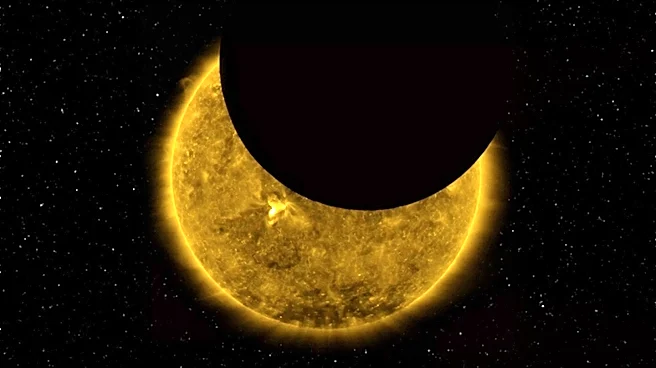
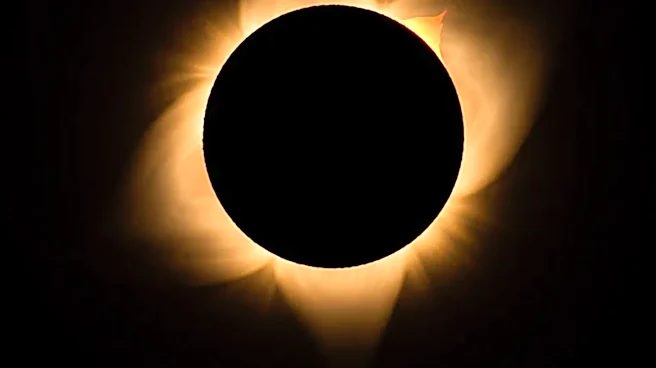
Following this event, observers can look forward to a total solar eclipse on August 12, 2026, which will be visible in parts of Greenland, Iceland, and northern Spain, with a partial eclipse observable in North America. This sequence of celestial events may increase public interest in astronomy and space science, potentially influencing educational programs and public policy related to space exploration. The continued observation of such events can also contribute to scientific research and the development of new technologies for space exploration.