







What's Happening?
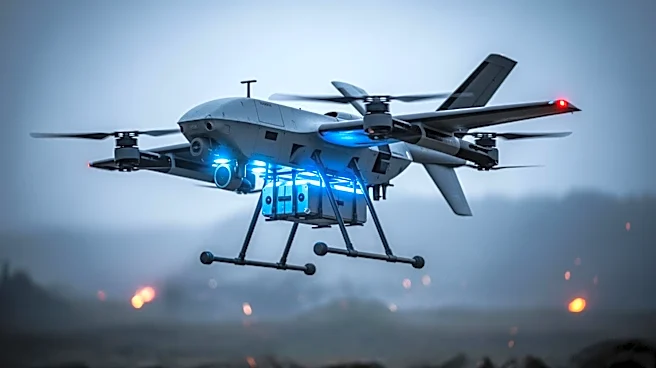
Ukraine is adapting its reconnaissance and attack drones to deliver essential supplies to soldiers on the front lines, as traditional supply routes have become perilous due to heavy surveillance and attack drone activity. The Linza drone, developed by
Ukrainian arms company Frontline Robotics, is now being used by over 60 Ukrainian units to transport water, ammunition, and medical supplies. This shift is part of a broader strategy to minimize human presence in dangerous areas, described as 'kill zones' by officials, where any movement is at risk of being targeted. The Linza drone has been upgraded to carry heavier loads over longer distances, enhancing its logistical capabilities. This adaptation is crucial as Ukraine aims to reduce the number of soldiers required on the front lines, relying more on unmanned systems to perform tasks traditionally handled by humans.
Why It's Important?
The repurposing of drones for logistics highlights the evolving nature of warfare, where technology plays a critical role in ensuring the safety of military personnel. By reducing the need for human involvement in high-risk areas, Ukraine is attempting to protect its soldiers while maintaining operational effectiveness. This development could influence military strategies globally, as other nations may adopt similar technologies to enhance their logistical operations in conflict zones. The shift towards unmanned systems also underscores the increasing importance of technological innovation in modern warfare, potentially leading to a future where machines play a dominant role in combat scenarios.
What's Next?
Ukraine's defense strategy is likely to continue evolving with a focus on increasing the autonomy and capabilities of unmanned systems. The goal is to eventually hand over all frontline logistics to robotic systems, thereby further reducing the risk to human soldiers. This transition may involve the development of more advanced drones capable of performing complex tasks autonomously. Additionally, the integration of artificial intelligence in these systems could lead to more efficient and effective military operations. As Ukraine continues to innovate, other countries may observe and potentially adopt similar strategies, influencing global military practices.
Beyond the Headlines
The use of drones for logistics in conflict zones raises ethical and legal questions about the role of autonomous systems in warfare. As these technologies become more prevalent, there will be a need for international regulations to govern their use, ensuring compliance with humanitarian laws. The shift towards machine-dominated battlefields also poses challenges in terms of cybersecurity, as adversaries may attempt to disrupt or hijack these systems. Furthermore, the reliance on technology could lead to a new arms race, with countries investing heavily in developing more advanced unmanned systems.