






What's Happening?
Gerardo Escobar Balderas, a 38-year-old man from Dallas, has been sentenced to 10 years and one month in federal prison for his role in a cocaine distribution conspiracy that funneled large amounts of the drug into Rapid City, South Dakota. U.S. District
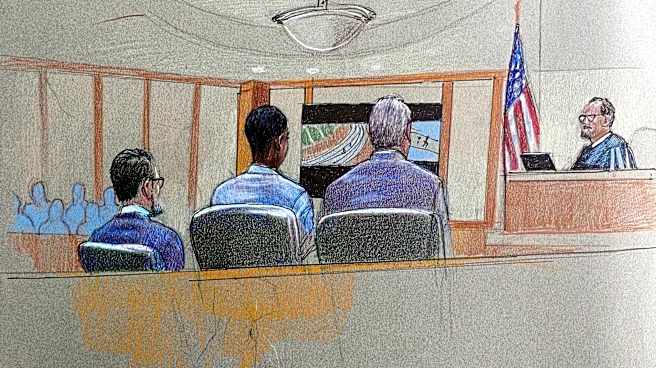
Judge Karen E. Schreier handed down the concurrent sentences after Balderas pleaded guilty to conspiracy to distribute a controlled substance and money laundering. Following his release, he will serve four years of supervised release and must pay a $200 special assessment. Federal prosecutors stated that Balderas was a key figure in the operation, mailing cocaine from Texas to an associate in Rapid City for redistribution, with proceeds sent back to him via electronic cash transfers. Authorities estimate he was responsible for distributing approximately 12 kilograms of cocaine in Rapid City. This sentencing concludes a years-long drug conspiracy case that involved eight defendants, with other individuals receiving sentences ranging from 12 months to 15 years.
Why It's Important?
This sentencing marks a significant victory for law enforcement agencies combating drug trafficking networks that span across state lines. The successful prosecution of Gerardo Escobar Balderas and his co-conspirators disrupts a major supply chain of cocaine into Rapid City, potentially reducing the availability of illicit drugs in the community. The involvement of multiple agencies, including the Unified Narcotics Enforcement Team (UNET), the U.S. Postal Inspection Service, and the South Dakota Division of Criminal Investigation, highlights the collaborative effort required to dismantle such complex operations. This case sends a strong message to individuals involved in drug distribution that federal authorities are committed to pursuing and prosecuting those who contribute to the drug trade, regardless of their location. The long prison sentence also underscores the severe consequences associated with drug trafficking and money laundering, serving as a deterrent to others considering similar criminal activities.
What's Next?
Following his sentencing, Gerardo Escobar Balderas has been remanded to the custody of the U.S. Marshals Service to begin serving his federal prison term. The conclusion of this specific case may lead to further investigations or intelligence gathering by law enforcement to identify and dismantle any remaining elements of the drug network or related criminal enterprises. The success of this multi-agency task force, UNET, suggests that similar collaborative efforts will continue to be employed in future drug investigations in the region. The community of Rapid City may experience a temporary reduction in cocaine availability, though drug enforcement efforts are typically ongoing to prevent new supply lines from emerging. The case also reinforces the importance of inter-state cooperation in addressing drug trafficking, as criminal networks often operate across multiple jurisdictions.
Beyond the Headlines
The case of Gerardo Escobar Balderas sheds light on the intricate logistics and financial mechanisms employed by drug trafficking organizations, particularly the use of mail services and electronic cash transfers to move drugs and money across states. This highlights the challenges faced by law enforcement in tracking and intercepting these illicit flows. Beyond the immediate impact on drug supply, such convictions contribute to broader efforts to combat organized crime and its associated social costs, including addiction, violence, and public health issues. The long-term implications for communities like Rapid City involve not only law enforcement interventions but also the need for sustained public health initiatives to address drug abuse and support recovery. The case also underscores the importance of federal jurisdiction in prosecuting crimes that cross state lines, ensuring that individuals involved in large-scale drug conspiracies face appropriate legal consequences.