
What's Happening?
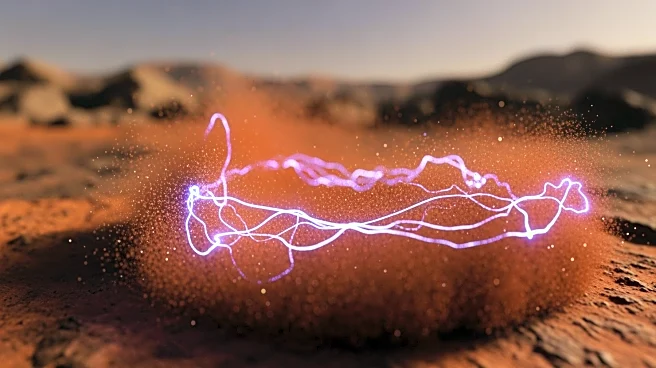
NASA's Perseverance rover, equipped with a microphone, has recorded unusual acoustic patterns during dust devil activity on Mars, revealing the presence of electrical sparks within these storms. This marks
the first direct evidence of electricity in the Martian atmosphere. The discovery was made as the rover traversed Jezero Crater, capturing signals that stood out from the background wind noise. These findings suggest that as dust particles collide and rub together, they generate friction-based electric charges, leading to micro-sparks detectable by the rover's instruments.
Why It's Important?
The detection of electrical activity in Martian dust devils has significant implications for understanding Mars' atmospheric chemistry. These electric discharges can generate reactive oxidizing agents capable of breaking down organic molecules, affecting the longevity of chemicals like methane on the Martian surface. This discovery could help explain the rapid disappearance of methane, a mystery that has puzzled scientists. Additionally, the presence of charged dust poses engineering challenges for future missions, as it could interfere with sensitive equipment and degrade solar panels.
What's Next?
Future missions to Mars may need to consider the risk of electrostatic interference with equipment due to charged dust storms. Engineers might need to design better-protected systems to ensure the safety and reliability of exploration missions. The ongoing data collection by Perseverance's microphone will continue to provide insights into Martian weather patterns, aiding in the planning of both robotic and human missions to the Red Planet.