


What's Happening?
The primary election results for the Big Bend area of Florida have been released, detailing the outcomes of various multi-county, county, and city races. In the United States Senator race, Ashley Moody secured the Republican nomination, while Angie Nixon
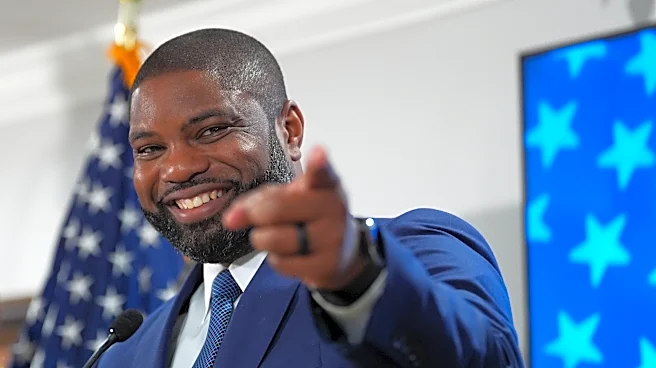
won for the Democrats. For Representative in Congress, District 2, Austin Rogers emerged as the Republican nominee and Amanda Marie Green for the Democrats. In the gubernatorial primaries, Byron Donalds won the Republican nomination, and the ticket of David Jolly & Gwen Graham secured the Democratic nomination. Blaise Ingoglia won the Republican primary for Chief Financial Officer, with Annette Taddeo winning for the Democrats. Wilton Simpson secured the Republican nomination for Commissioner of Agriculture, and Joey Mendoza Atkins won for the Democrats. Several local races, including school board positions and county commissioner seats across Jackson, Calhoun, Gulf, Liberty, Gadsden, and Leon counties, did not yield a candidate with over 50% of the vote, triggering runoff elections scheduled for November 3rd. Notably, the City Commissioner Seat 3 race in Leon County between Tom Derzypolski and Talethia O. Edwards has triggered a recount.
Why It's Important?
These primary election results are crucial as they determine the candidates who will advance to the general election in November, shaping the political landscape of Florida's Big Bend region. The outcomes reflect the current political sentiments and preferences of voters in these areas, providing insight into potential shifts in local and state governance. The high number of runoff elections indicates a competitive political environment and a lack of clear majority support for any single candidate in several key local races, suggesting that voters are divided or that there are multiple strong contenders. These runoffs will require further campaigning and voter engagement, extending the election cycle and potentially increasing voter turnout in November. The recount in the Leon County City Commissioner Seat 3 race highlights the close margins in some contests, emphasizing the importance of every vote and the meticulous process of election verification. The results will directly impact local policy-making, resource allocation, and community representation in the coming years.
What's Next?
The immediate next step following these primary results is the preparation for runoff elections scheduled for November 3rd in several counties, including Jackson, Calhoun, Gulf, Liberty, Gadsden, and Leon. Candidates involved in these runoffs will intensify their campaigns to secure the necessary votes. Additionally, the recount for the Leon County City Commissioner Seat 3 race will proceed, with official results to be confirmed after its completion. All winning primary candidates will now focus on their general election campaigns, aiming to garner broader support from the electorate. Political parties will likely mobilize resources to support their nominees in both the runoffs and the general election. Voters in the affected districts will need to remain engaged to participate in the runoff elections and make their final choices in November. The outcomes of these upcoming elections will determine the composition of various local and state offices, influencing governance and policy for the next term.
Beyond the Headlines
The Florida primary results, particularly the prevalence of runoff elections, reveal deeper dynamics within the state's political system. The need for runoffs often indicates a fragmented voter base or a strong presence of multiple viable candidates, which can lead to more nuanced political discourse and potentially more representative outcomes as candidates are forced to appeal to a broader coalition of voters. This process can also highlight the influence of local issues and community-specific concerns that might not be as prominent in statewide or national elections. Ethically, the integrity of the election process, especially with recounts, becomes paramount, reinforcing public trust in democratic institutions. Culturally, these elections reflect the diverse political leanings within Florida's Big Bend region, showcasing a blend of conservative and progressive viewpoints that shape local governance. The long-term implication could be a more engaged local electorate and a political landscape that is highly responsive to community needs, as candidates must work harder to secure definitive mandates.