










What's Happening?
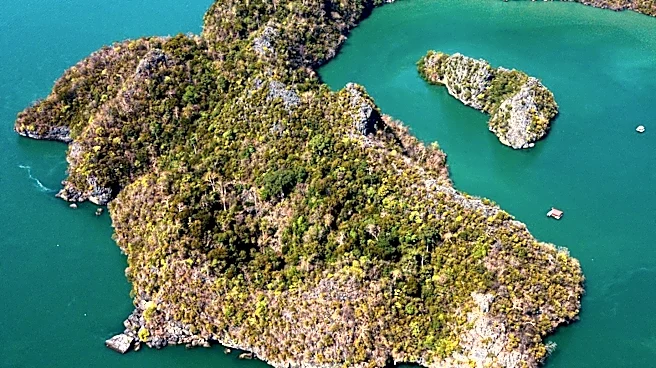
NASA's Earth Observatory has highlighted the biodiversity of the Bijagós Archipelago in Guinea-Bissau, a UNESCO World Heritage site. The archipelago, consisting of 88 islands, is characterized by its dynamic tidal systems that expose sandflats and mudflats,
supporting a rich array of marine life. This region is a crucial stopover for migratory shorebirds and hosts a significant population of green sea turtles. The area's unique tidal range, one of the largest in West Africa, is attributed to its wide, shallow shelf and estuary geometry. NASA's satellite data has been instrumental in studying these tidal patterns.
Why It's Important?
The Bijagós Archipelago's biodiversity is vital for ecological research and conservation efforts. Understanding the tidal dynamics and their impact on marine and bird life can inform strategies to protect these ecosystems. The archipelago's role as a habitat for endangered species like the green sea turtle underscores the importance of international conservation initiatives. NASA's involvement highlights the role of satellite technology in environmental monitoring, providing data that can aid in the preservation of biodiversity and the management of natural resources.