





What's Happening?
The functionality and longevity of many smart home devices are increasingly dependent on manufacturers' cloud services, posing a significant risk to consumers. When companies cease operations or discontinue support for older products, devices can lose
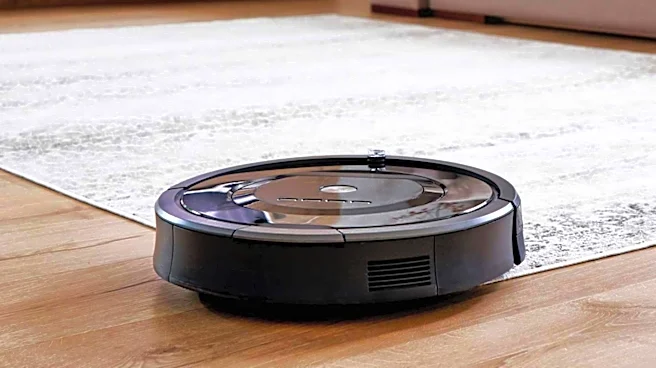
essential features, including app controls and integration with other smart home ecosystems. Examples include Neato Robotics' robot vacuum, which became inoperable via its app after its parent company phased out cloud services, and Belkin discontinuing cloud services for numerous WeMo products, rendering their app and Google Assistant integration non-functional. This issue highlights a critical vulnerability in the smart home ecosystem, where hardware can become effectively obsolete if its supporting cloud infrastructure is removed, leaving consumers with non-functional or significantly degraded devices.
Why It's Important?
This reliance on manufacturer cloud services has significant implications for U.S. consumers and the smart home industry. For consumers, it represents a financial risk, as expensive devices can lose functionality prematurely, leading to frustration and a lack of trust in smart home technology. This issue also raises questions about consumer rights and product longevity in an increasingly connected world. For the industry, it underscores the need for more sustainable business models and product designs that prioritize long-term functionality. Companies that fail to address these concerns risk damaging their brand reputation and slowing the broader adoption of smart home technologies. The problem also contributes to electronic waste, as otherwise functional hardware is discarded due to software or service discontinuation.
What's Next?
The smart home industry is moving towards solutions that mitigate the risks associated with cloud service dependency. The Matter standard, backed by major tech companies like Apple, Google, and Amazon, aims to enable local control for basic device functions, allowing gadgets to communicate directly with a controller without proprietary cloud services. This standard is expected to provide a degree of future-proofing for smart home devices. Consumers are also advised to prioritize devices offering local control and Matter compatibility, research manufacturer support policies, and consider devices with an 'exit strategy'—the ability to work with other ecosystems or controllers. However, manufacturer-specific features and firmware updates may still require internet connectivity, indicating that Matter is not a complete solution.
Beyond the Headlines
The issue of smart home device longevity extends beyond mere inconvenience, touching upon broader themes of digital ownership and consumer sovereignty. When a device's core functionality is tied to a third-party service, consumers effectively lease rather than own the full capabilities of their purchase. This raises ethical questions about the control manufacturers exert over products post-sale and the implicit expiration dates on connected hardware. Legally, this area is still evolving, with potential implications for consumer protection laws regarding product durability and advertised features. Culturally, it challenges the traditional notion of ownership, pushing consumers to consider the long-term viability of their tech investments and fostering a demand for more open, interoperable, and locally controlled smart home ecosystems.