
What's Happening?
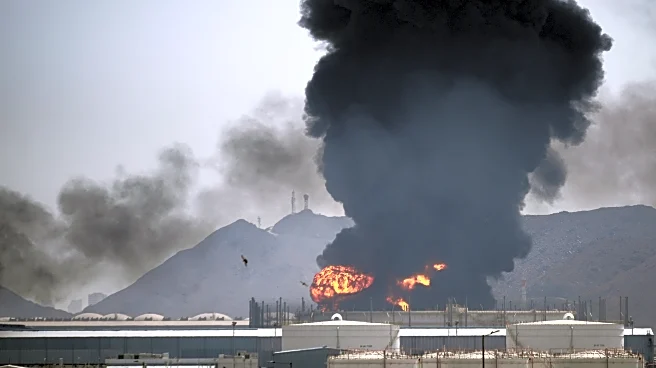
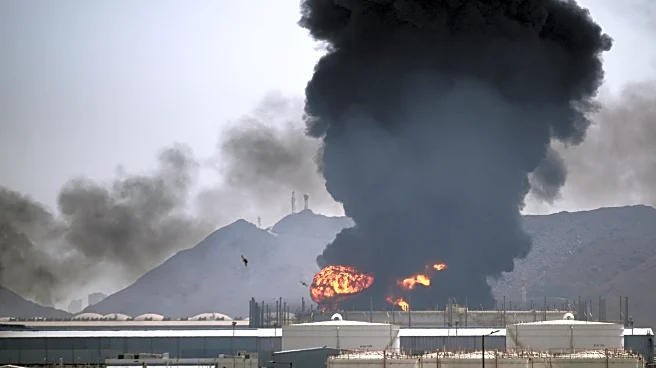
In Dubai, three survivors of an Iranian drone strike have been arrested for sending photos of the explosion aftermath to their families. The incident occurred following a strike that damaged an apartment complex in the city. The arrests highlight Dubai's
strict cybercrime laws, which prohibit sharing material that could disturb public security. Violators face severe penalties, including hefty fines and imprisonment. The arrests have drawn attention to the challenges faced by residents and tourists in navigating local laws during times of regional conflict.
Why It's Important?
The arrests underscore the tension between security measures and personal freedoms in Dubai, particularly during periods of heightened regional conflict. The enforcement of strict cybercrime laws reflects the UAE's approach to maintaining public order, but it also raises concerns about the treatment of individuals caught in conflict zones. The situation highlights the broader implications for expatriates and tourists in the region, who may inadvertently violate local laws while attempting to communicate with loved ones. This incident may prompt discussions on the balance between security and human rights in the UAE.
Beyond the Headlines
The incident raises questions about the legal and ethical dimensions of information sharing in conflict zones. The use of cybercrime laws to control the narrative during conflicts can lead to human rights concerns, particularly regarding freedom of expression and the right to communicate. The situation also reflects the broader geopolitical tensions in the region, where information control is a strategic tool. The international community may need to consider the implications of such laws on expatriates and tourists, as well as the potential for diplomatic interventions to address human rights issues.