







What's Happening?
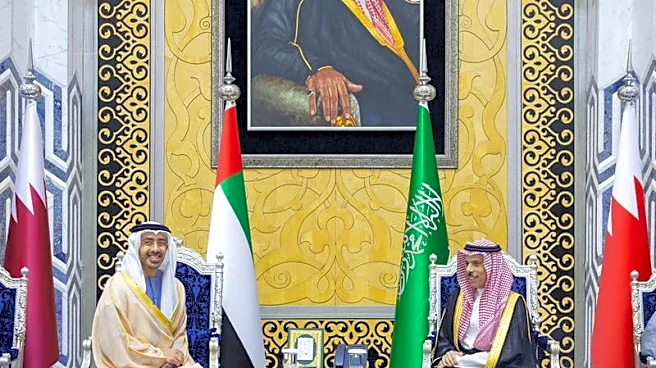
The United Arab Emirates (UAE) has officially announced its departure from the Organization of Petroleum Exporting Countries (OPEC), a decision that marks a significant shift in the global oil market. The UAE, a pivotal member of OPEC for nearly six decades,
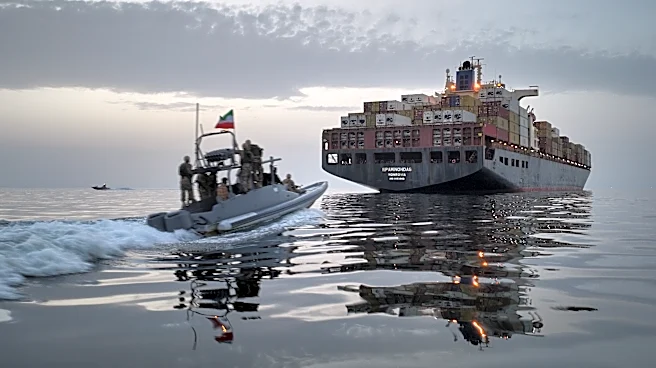
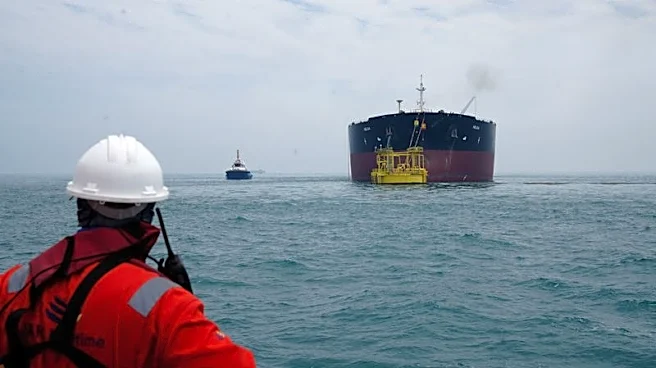
has decided to leave the cartel to pursue a more flexible and market-responsive oil production strategy. This move is driven by the UAE's desire to increase its oil output capacity and utilize its investments in production infrastructure without the limitations of OPEC's production quotas. The decision comes amid ongoing geopolitical tensions and the UAE's strategic efforts to secure alternative export routes, such as pipelines to the Gulf of Oman, to bypass the Strait of Hormuz.
Why It's Important?
The UAE's exit from OPEC could have substantial implications for the global oil market. As one of OPEC's largest producers, the UAE's departure may weaken the cartel's influence over global oil prices and supply management. This could lead to increased price volatility and uncertainty in the oil market, affecting economies worldwide. The UAE's move towards a more independent production strategy may also prompt other OPEC members to reconsider their positions, potentially leading to further fragmentation within the organization. For the UAE, this decision enhances its economic flexibility and positions it as a more competitive player in the global oil market.
What's Next?
Following the UAE's exit, OPEC may face challenges in maintaining cohesion and managing global oil supply. Saudi Arabia, as a leading member, will likely need to reassess its strategies to stabilize the market and maintain group unity. The UAE's focus on increasing its production capacity and developing new export routes could influence other oil-producing nations to adopt similar strategies, potentially reshaping the global oil trade landscape. In the short term, the impact on oil supply may be limited due to existing transport constraints, but the long-term effects could lead to significant changes in international oil dynamics.