








What's Happening?
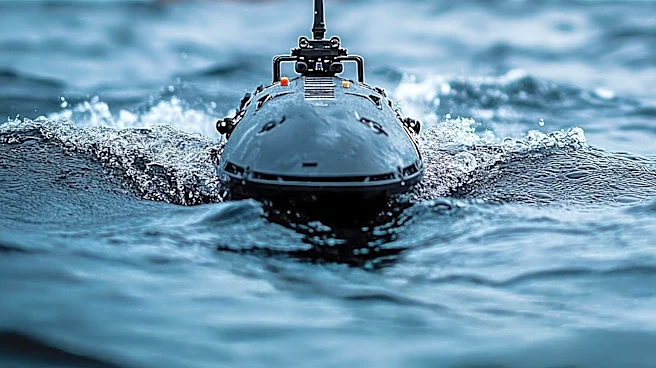
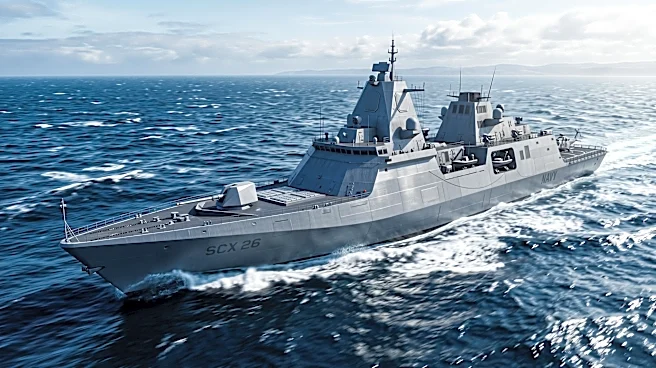
French shipbuilder Naval Group has revealed its concept for the warship of the 2040s, named the SCX 26. This vision for future naval combat emphasizes firepower, physical resilience, and modular adaptability. The SCX 26 is designed as an 8,000 to 10,000-tonne
vessel, measuring 170 meters (558 feet) in length, with a top speed of 30 knots (35 mph, 56 km/h) and a range of 8,000 nautical miles. It features accommodations for a core crew of 150, plus up to 100 drone operators, special mission forces, and fleet command staff. Its armament includes up to 128 vertical launch system (VLS) cells for various missiles, a 100-kW laser weapon, and a stealth 57-mm electromagnetic railgun turret. A key design element is its unusual double superstructure, providing redundancy for electronics, communications, radar, and electronic warfare assets, ensuring continued operation even after significant damage or cyber-attacks.
Why It's Important?
The SCX 26 concept highlights the evolving nature of naval warfare and the strategic priorities for future maritime defense, which could significantly influence U.S. naval development and alliances. The emphasis on energy weapons like lasers and railguns, along with advanced drone integration, indicates a shift towards more technologically sophisticated and autonomous combat systems. For the U.S. and its allies, understanding these developments is crucial for maintaining technological superiority and interoperability. The vessel's role as a command-and-control mothership for a network of crewed and uncrewed platforms reflects a broader trend in military strategy towards integrated, multi-domain operations. The redundancy built into its design addresses the increasing threats of massed missile attacks and swarming drones, which are concerns shared by global naval powers.
What's Next?
As a concept, the SCX 26 represents a blueprint for future naval innovation. Its development suggests that naval powers will continue to invest heavily in advanced weaponry, drone technology, and resilient ship designs. The focus on modularity and adaptability indicates a move towards platforms that can be rapidly reconfigured for diverse missions and evolving threats. Future naval procurement and research and development efforts, including those in the U.S., are likely to incorporate similar features, such as enhanced energy weapons, integrated drone operations, and robust cyber-physical defenses. International collaborations in naval technology and defense strategies may also be influenced by such advanced concepts, as nations seek to develop interoperable and highly capable fleets.
Beyond the Headlines
The SCX 26 concept underscores a fundamental shift in military thinking, moving beyond traditional naval combat to embrace a more networked and autonomous approach. The integration of AI and digital networks for real-time, autonomous operations raises ethical and legal questions regarding the role of human decision-making in future warfare. The emphasis on redundancy and resilience also reflects a recognition of the increasing sophistication of cyber threats and the need to protect critical military infrastructure from digital attacks. This vision of a 'super-warship' suggests a future where naval forces are not just platforms for weapons, but complex, interconnected systems capable of managing vast arrays of assets, potentially redefining maritime power projection and global security dynamics.