









What's Happening?
House Republicans have moved forward with a $95 billion budget plan designed to meet President Trump's demands for increased defense funding related to the Iran war, farm assistance, and a comprehensive overhaul of voting requirements ahead of the upcoming
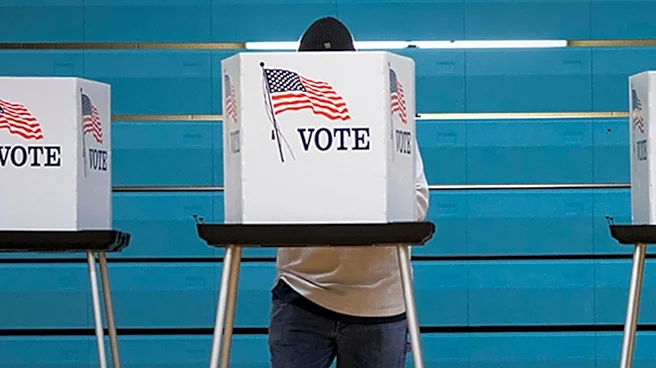
midterm elections. The budget resolution, approved by a Republican-controlled budget panel, is set to be voted on by the full House. If passed, it would enable a special budget reconciliation bill to pass the Senate with a simple majority, bypassing the usual 60-vote requirement. The plan includes allocations of $60 billion for defense, $13 billion for intelligence, $12 billion for agriculture, and $10 billion for the SAVE America Act, which focuses on voter ID requirements. Democrats have criticized the plan for not addressing rising costs of essential goods, while Republicans argue it is necessary to support military readiness and voter integrity.
Why It's Important?
The budget plan is significant as it reflects the ongoing political divide in Congress, with Republicans pushing for increased defense spending and election reforms, while Democrats focus on economic issues affecting everyday Americans. The plan's passage could impact U.S. military operations, particularly in the Middle East, and influence the upcoming elections by implementing stricter voter ID laws. The use of budget reconciliation to pass the plan highlights the strategic maneuvering in Congress to achieve legislative goals despite partisan opposition. The outcome of this budget plan could set a precedent for future legislative processes and impact the balance of power in Congress.
What's Next?
The resolution is expected to face challenges in the Senate, where defense hawks may demand more Pentagon funding, and deficit hawks may seek spending cuts to offset the new allocations. Additionally, the SAVE America Act's voter ID requirements are likely to face strong opposition from Democrats, who argue it could disenfranchise voters. The House is expected to vote on the resolution soon, but its passage is uncertain due to potential opposition from within the Republican party. The outcome will depend on negotiations and potential amendments to address concerns from various stakeholders.