

What's Happening?
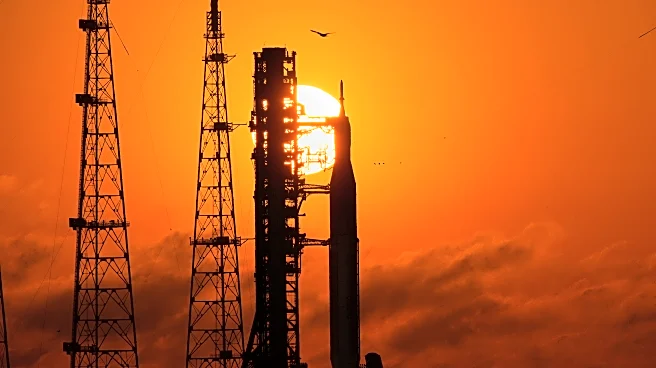
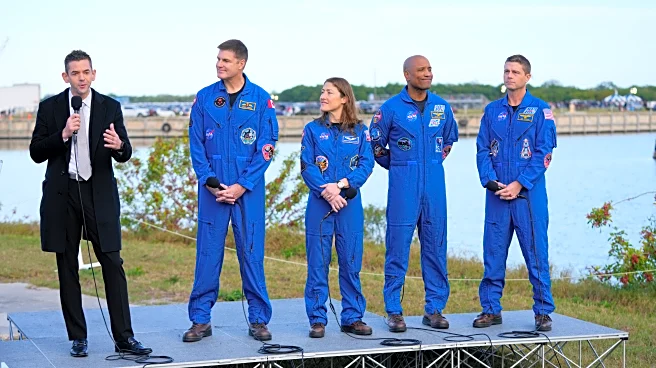
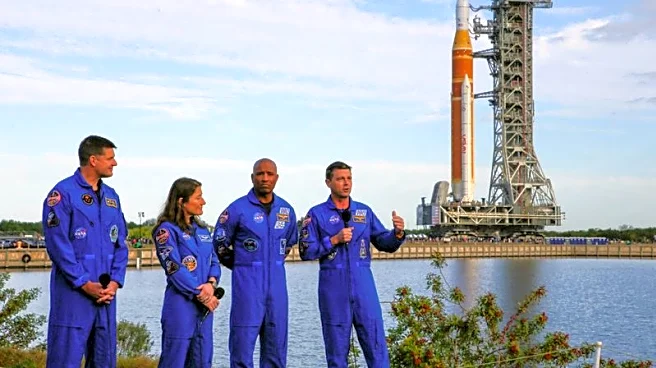
NASA's Artemis II mission is set to launch from Kennedy Space Center in Florida, marking the first crewed moonshot since 1972. The mission involves a four-person crew traveling nearly half a million miles over nine days, looping around the moon's far
side before returning to Earth. Given the inherent risks of space travel, NASA has coordinated with the Air Force's Detachment 3, a unit responsible for astronaut rescues since 1959, to prepare for any potential emergencies. The unit conducts rigorous training and simulations to ensure readiness for scenarios such as a mid-launch abort. During these simulations, a C-17 military aircraft deploys rescue equipment, including jet skis, inflatable boats, and medical supplies, to the splashdown site. Pararescue jumpers, known as PJs, are tasked with retrieving the crew and providing necessary survival support until further assistance arrives.
Why It's Important?
The Artemis II mission is a significant step in NASA's efforts to return humans to the moon and eventually establish a sustainable presence there. The mission's success could pave the way for future lunar exploration and potential Mars missions. The comprehensive rescue plans underscore the importance of astronaut safety in space exploration, highlighting the collaboration between NASA and military units to mitigate risks. This mission also serves as a test flight, providing valuable data and experience that will inform future crewed missions. The readiness and adaptability of the rescue teams are crucial for ensuring the safety of the crew, which is paramount for the mission's success and the continuation of human space exploration.
What's Next?
As the launch date approaches, NASA and the rescue teams will continue to refine their plans and conduct additional simulations to address any unforeseen challenges. The success of Artemis II will likely influence the timeline and planning of subsequent Artemis missions, including the goal of landing the first woman and the next man on the moon. Stakeholders, including government agencies and private space companies, will closely monitor the mission's outcomes to assess the viability of future lunar and deep space exploration initiatives.