




What's Happening?
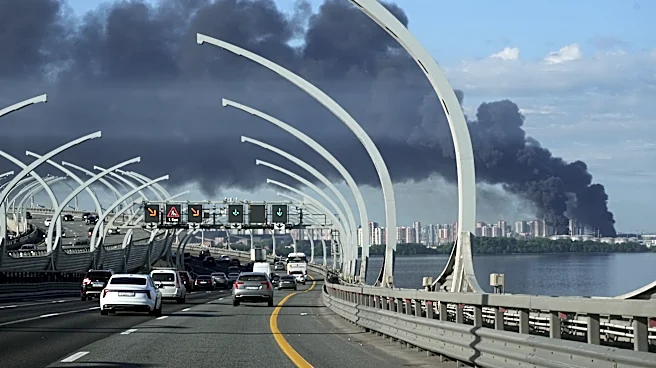
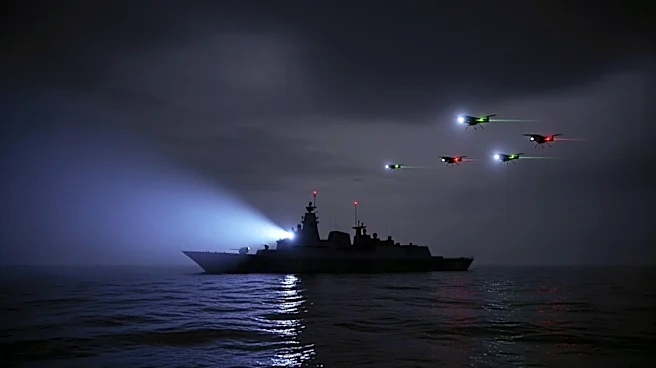
A coordinated drone assault by Ukraine has targeted and damaged key Russian naval facilities, ammunition depots, and oil refineries. The operation, which took place on June 6, involved a swarm of 88 drones that struck multiple regions, including the Leningrad
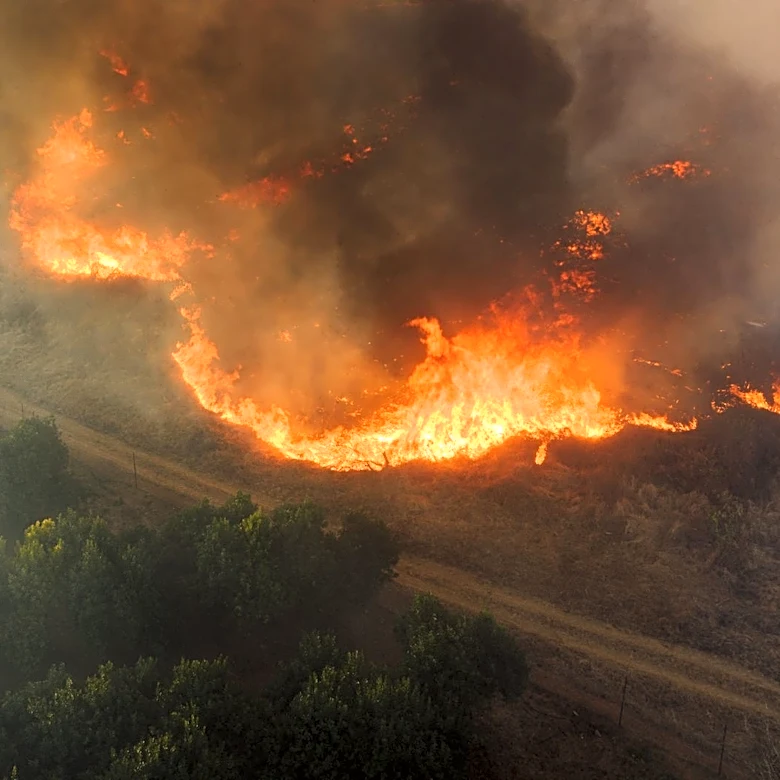
region and the city of St. Petersburg. The attacks led to fires and significant damage at the Kronstadt Marine Plant, a major base for the Russian Navy's Baltic Fleet, and the 15th Arsenal of the Russian Navy. Additionally, the Poltavskaya oil depot in the Krasnodar region and the Antipinsky Oil Refinery in Tyumen were hit, causing large fires but no reported casualties. The strikes also extended to the occupied Ukrainian port city of Mariupol, where drones bypassed air defenses to hit the seaport used by Russian forces.
Why It's Important?
This drone operation highlights the escalating use of unmanned aerial vehicles in modern warfare, particularly in the ongoing conflict between Ukraine and Russia. The strikes on critical infrastructure such as naval bases and oil refineries could disrupt Russian military logistics and energy supplies, potentially impacting Russia's operational capabilities. The attacks also demonstrate Ukraine's ability to conduct long-range precision strikes, which could alter the strategic dynamics of the conflict. For the U.S. and its allies, these developments underscore the importance of drone technology in contemporary military strategy and the need for robust defenses against such threats.
What's Next?
The immediate aftermath of these strikes may see increased military activity and heightened tensions in the region. Russia is likely to bolster its air defenses and possibly retaliate with its own military actions. The international community, including the U.S., will be closely monitoring the situation, as further escalation could have broader geopolitical implications. Diplomatic efforts may intensify to prevent further deterioration of the conflict, while military analysts will assess the effectiveness and implications of drone warfare in this context.
Beyond the Headlines
The use of drones in this conflict raises ethical and legal questions about the conduct of warfare and the targeting of civilian infrastructure. The potential for collateral damage and the impact on civilian populations are significant concerns. Additionally, the proliferation of drone technology poses challenges for international security, as non-state actors and smaller nations may seek to acquire similar capabilities. This development could lead to a reevaluation of international norms and regulations governing the use of drones in armed conflict.