






What's Happening?
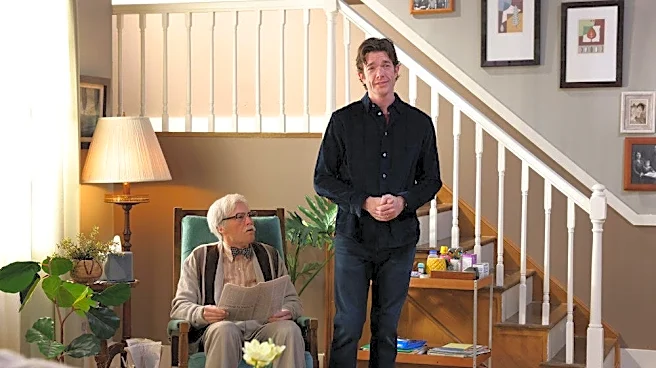
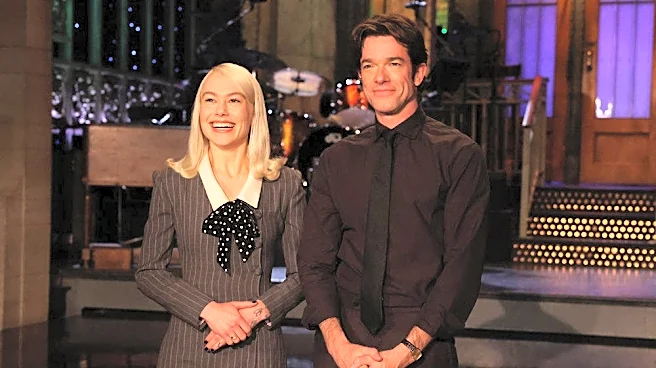
A recent pre-recorded Saturday Night Live (SNL) sketch featuring comedian John Mulaney has gone viral, drawing millions of views and prompting widespread discussion about the disproportionate caregiving responsibilities often borne by women. The sketch,
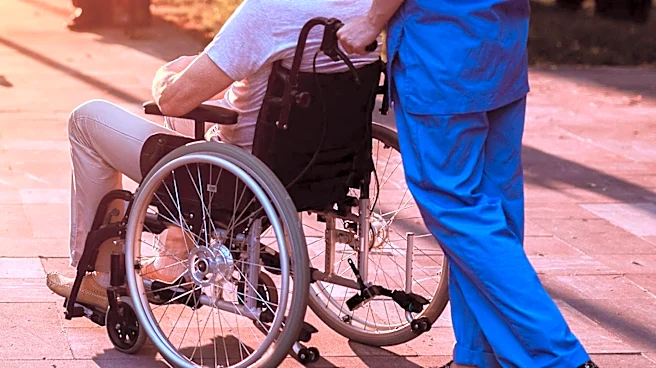
titled 'Sister,' satirically depicts a service where a woman's actual sister is summoned to provide free, round-the-clock care for an aging parent, highlighting the societal expectation that women will fulfill this role. Dr. Donna Benton, director of the USC Family Caregiver Support Center, reported a significant increase in emails and texts following the sketch's airing, indicating it resonated deeply with many women. Research cited by AARP shows that nearly 1 in 5 adults in the U.S. (51 million Americans) care for loved ones aged 50 and older, with three in five family caregivers being women. Studies also indicate that daughters spend more than twice as much time caring for aging parents as sons do, averaging 12.3 hours a month compared to 5.6 hours for sons.
Why It's Important?
The SNL sketch has brought critical attention to a long-standing societal issue often referred to as the 'daughter tax' or the 'national care crisis.' The unequal distribution of caregiving responsibilities has significant financial, emotional, and physical consequences for women. AARP estimates that family caregivers spend an average of $11,508 annually out-of-pocket, with this figure rising to $15,846 for those caring for individuals with Alzheimer's or dementia. Caregivers often devote 31% of their household income to these expenses. Furthermore, many women caregivers experience negative impacts on their physical and emotional health, with nearly 40% reporting harm to their physical health and 47% to their emotional well-being. The lack of federal paid family leave or job protection for those caring for aging parents forces many to reduce work hours, leave the workforce, or retire early, resulting in an average forfeiture of $120,500 in wages, retirement savings, and Social Security benefits.
What's Next?
The viral SNL sketch has initiated a national conversation, with Dr. Donna Benton expressing hope that it will lead to broader changes in how caregiving is approached in the U.S. Experts like Benton and Debra Whitman, AARP’s chief public policy officer, suggest that families need to engage in open discussions about care needs before they arise and actively divide responsibilities. Broader systemic changes are also being called for, including exploring options for caregiving to earn Social Security credits and implementing tax breaks for individuals who take time off for elder or childcare. With the U.S. population aging, the demand for elder care is projected to increase significantly over the next decade, making the current unsustainable system a pressing issue that requires comprehensive long-term strategies and policy reforms.
Beyond the Headlines
The 'Sister' sketch delves into deeper ethical and cultural dimensions of caregiving, exposing how deeply ingrained gender roles influence family responsibilities. The concept of 'internalized sexism' mentioned in the sketch highlights how societal expectations can subtly pressure women into assuming primary caregiving roles, often at great personal cost. This phenomenon turns caregivers into 'invisible second patients,' as researchers describe, due to the toll on their physical, emotional, and financial well-being. The sketch also implicitly critiques the underfunding of social services and the limitations of existing healthcare systems, such as Medicare not covering long-term or nursing home care for daily activities. This points to a systemic failure to support families, particularly women, in navigating complex care systems, underscoring the need for a fundamental re-evaluation of national long-term care strategies and societal norms surrounding care responsibilities.