


What's Happening?
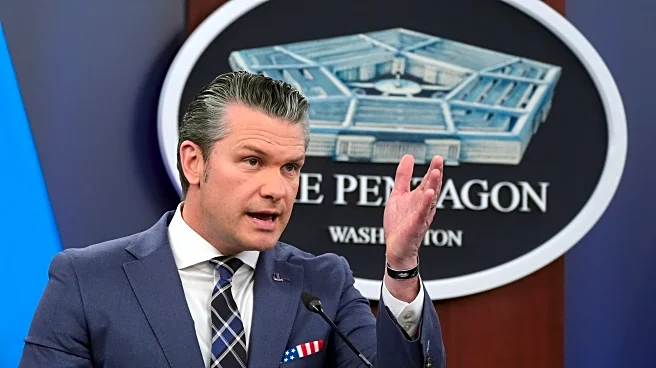
A federal judge has invalidated key parts of a press policy implemented by Defense Secretary Pete Hegseth, which restricted media access to the Pentagon. The ruling, delivered by senior US District Judge Paul Friedman, found that the policy violated the constitutional
rights of journalists. The policy, introduced last year, allowed the Pentagon to suspend or revoke press credentials based on reporting, a move that was challenged by The New York Times for infringing on First Amendment rights. The judge's decision comes amid heightened media scrutiny of the Defense Department due to ongoing military operations in Iran and Venezuela. The ruling voids provisions requiring reporters to pledge not to use unauthorized material, a condition that led many news organizations, including CNN and The New York Times, to refuse compliance, resulting in denied access to the Pentagon.
Why It's Important?
This ruling underscores the critical balance between national security and press freedom. By striking down parts of the Pentagon's policy, the court reaffirms the importance of a free press in maintaining government transparency and accountability, especially during military conflicts. The decision is significant for media organizations, as it protects their ability to report on defense matters without undue governmental interference. This ruling could influence future policies regarding media access to government institutions, ensuring that journalists can provide the public with diverse perspectives on government actions, which is essential for informed public discourse and democratic decision-making.
What's Next?
Following the ruling, the Pentagon may need to revise its press policies to align with constitutional standards. The Defense Department could appeal the decision, potentially leading to further legal battles over media access rights. Media organizations are likely to continue advocating for unrestricted access to government information, emphasizing the role of journalism in democratic societies. The outcome of this case may set a precedent for how other government agencies handle press access, potentially prompting a reevaluation of similar policies across federal institutions.