







What's Happening?
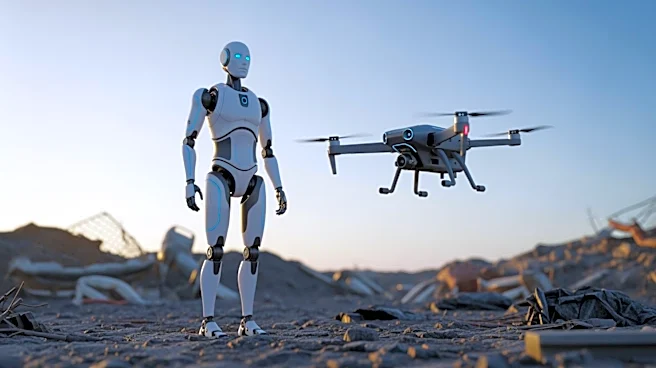
Engineers at the California Institute of Technology (Caltech) and Abu Dhabi's Technology Innovation Institute (TII) have developed a multi-robot system known as X1, designed for rescue missions in hazardous environments. The X1 system consists of a humanoid
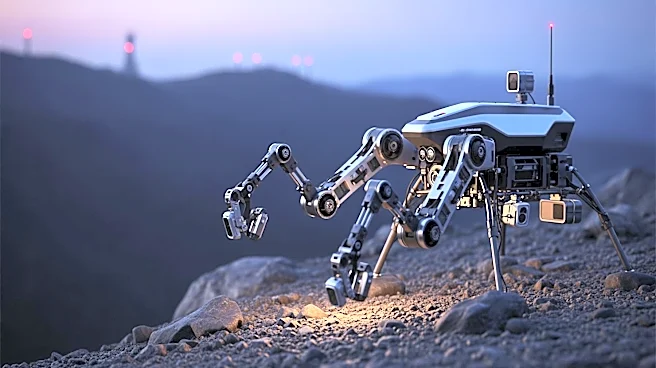
robot, a modified Unitree G1, which can walk on two legs and carry heavy equipment, and a morphing robot, M4, that can change shape to meet mission demands. The project, led by Aaron Ames, director of Caltech's Center for Autonomous Systems and Technologies, focuses on creating autonomous robots capable of navigating complex terrains without direct human control. During a demonstration, the X1 system successfully navigated through tight spaces and released the M4 robot, which transformed from a drone to a wheeled vehicle, showcasing its versatility in rescue scenarios.
Why It's Important?
The development of the X1 multi-robot system represents a significant advancement in autonomous rescue technology. By combining the capabilities of humanoid robots and drones, X1 can perform tasks that are too dangerous for humans, such as scouting disaster zones or delivering supplies in hazardous conditions. This innovation could revolutionize emergency response efforts, reducing the risk to human life and increasing the efficiency of rescue operations. The ability of X1 to adapt to different terrains and conditions highlights the potential for robots to play a crucial role in future disaster management and recovery efforts.
What's Next?
The X1 system is currently in the testing phase, with engineers working to ensure its reliability and safety in real-world scenarios. The team aims to demonstrate the system's ability to operate autonomously without human intervention, even in the event of sensor failures or communication disruptions. Before deployment in actual disaster zones, the X1 system must gain regulatory approval and public trust, which involves proving its safety and effectiveness through extensive testing. If successful, X1 could become a vital tool for first responders, capable of navigating and assessing dangerous environments before human teams arrive.
Beyond the Headlines
The development of the X1 system raises important questions about the future of robotics in emergency response. As robots become more autonomous and capable, ethical considerations regarding their deployment and decision-making processes will need to be addressed. Ensuring that these machines operate safely and transparently is crucial to gaining public acceptance and trust. Additionally, the integration of advanced robotics into emergency services could lead to shifts in workforce dynamics, requiring new skills and training for human operators who will oversee and collaborate with robotic systems.