



What's Happening?
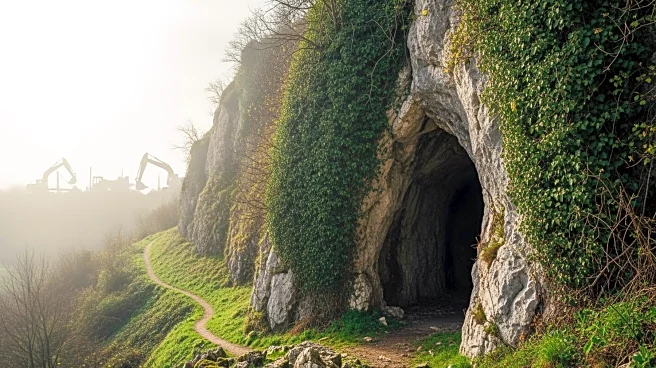
A significant archaeological discovery has been made near the West Bank settlement of Ofra, where a large cave, named 'Jubilee Cave', has been found. This cave, featuring a variety of speleothem formations such as stalactites and stalagmites, is considered
the largest underground chamber discovered in Israel. The cave, which is part of a broader karst system, was discovered by the Hebrew University's Cave Research Center. However, the cave is not accessible to the public due to its difficult and dangerous location. The cave's existence is threatened by the planned expansion of Route 60, which passes directly over it. This expansion could lead to the cave's collapse, as it is not protected by any nature reserve status.
Why It's Important?
The discovery of Jubilee Cave is significant for both scientific and environmental reasons. Scientifically, the cave offers a unique glimpse into geological formations that have developed over thousands, if not millions, of years. The potential collapse of the cave due to highway expansion poses a threat to this natural wonder and highlights the challenges of balancing infrastructure development with environmental conservation. The situation underscores the need for careful planning and consideration of natural landmarks in development projects. The cave's potential destruction could result in the loss of valuable scientific data and a natural heritage site.
What's Next?
The future of Jubilee Cave depends on the actions of local authorities and conservationists. There is a call for the cave to be included in a proposed national park to protect it from the impacts of infrastructure development. The Society for the Protection of Nature in Israel is advocating for better planning procedures to prevent such situations. The expansion of Route 60 is a pressing issue, and decisions made in the coming months will determine the cave's fate. If the cave is preserved, it could eventually be made accessible to the public, offering educational and tourism opportunities.
Beyond the Headlines
The situation with Jubilee Cave highlights broader issues of environmental conservation in areas of geopolitical tension, such as the West Bank. The lack of comprehensive environmental protection laws in these regions can lead to the neglect of natural sites. Additionally, the discovery raises questions about the impact of human activities on natural landscapes and the importance of integrating environmental considerations into urban planning. The case of Jubilee Cave could serve as a catalyst for policy changes regarding environmental protection in contested regions.