








What's Happening?
Economic anxiety is mounting in the United States as inflation continues to outpace wage growth, leading to a significant drop in personal savings for many Americans. This financial strain is becoming increasingly evident as individuals struggle to keep
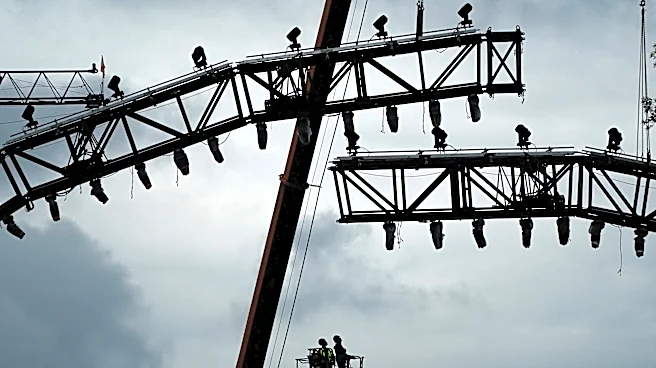
up with rising costs of living, which are not being matched by corresponding increases in income. The situation is exacerbated by broader economic uncertainties, including fluctuating market conditions and potential policy changes. Additionally, the construction of a UFC cage at the White House has drawn attention, though it remains unclear how this development ties into the broader economic narrative.
Why It's Important?
The current economic situation poses significant challenges for American households, particularly those with limited financial reserves. As inflation erodes purchasing power, individuals may find it increasingly difficult to afford basic necessities, potentially leading to increased debt and financial instability. This trend could have broader implications for the U.S. economy, as consumer spending, a key driver of economic growth, may decline. Furthermore, the situation highlights the need for effective economic policies that address inflation and support wage growth, ensuring that the benefits of economic recovery are more evenly distributed across different income groups.
What's Next?
Looking ahead, policymakers may need to consider measures to curb inflation and support wage growth to alleviate the financial burden on American households. This could involve adjustments to interest rates, fiscal policies, or targeted support for low-income families. Additionally, the construction of a UFC cage at the White House may prompt discussions about the intersection of politics and entertainment, though its direct impact on economic policy remains to be seen. Stakeholders, including government officials, businesses, and civil society groups, will likely continue to monitor these developments closely.