



What's Happening?
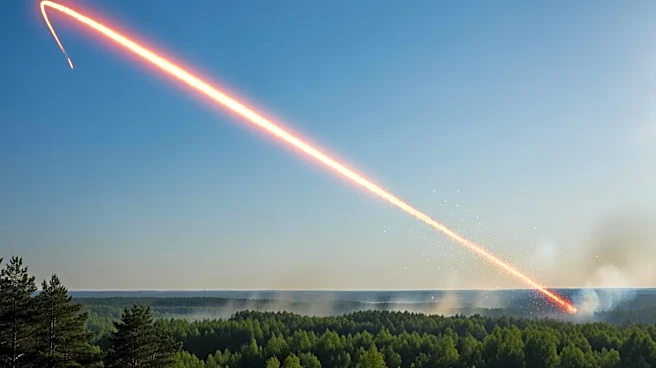
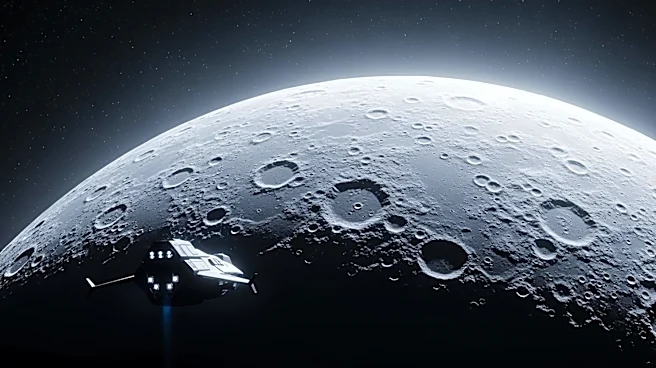
The Artemis II crew, during their historic lunar flyby, observed meteorites striking the Moon's surface. This unexpected observation occurred as the astronauts were taking high-resolution photographs of the Moon from a distance of 4,067 miles. The crew witnessed
at least five micrometeorite impacts after the Sun had set behind the Moon, creating a solar eclipse for the astronauts. The excitement was palpable at NASA's Johnson Space Center, as scientists had not anticipated such a high number of visible impacts. The Moon's lack of atmosphere allows micrometeorites to strike its surface at full speed, vaporizing or melting upon impact and contributing to the lunar regolith. This observation is part of the broader scientific goals of the Artemis II mission, which integrates science with exploration.
Why It's Important?
The Artemis II mission's observation of micrometeorite impacts on the Moon provides valuable data for understanding the lunar environment and the effects of space weathering. This information is crucial for future lunar exploration and potential colonization efforts, as it helps assess the risks posed by micrometeorites to both equipment and human activities on the Moon. The mission underscores the importance of integrating scientific research with exploration, as it enhances the knowledge base necessary for sustainable space exploration. The findings also contribute to the broader understanding of the Moon's geological history and the processes that have shaped its surface over billions of years.