







What's Happening?
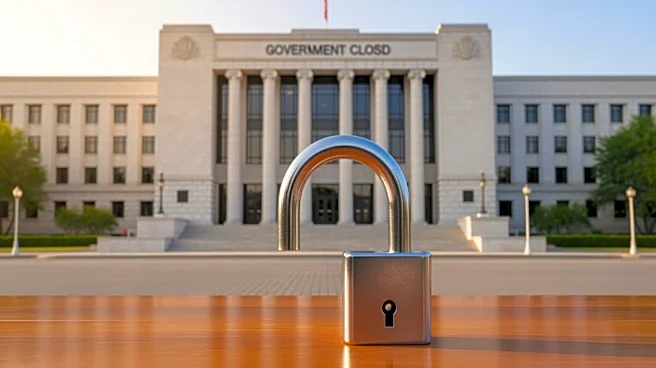
The U.S. House of Representatives has passed a Senate compromise bill to fund most of the Department of Homeland Security (DHS), excluding Immigration and Customs Enforcement (ICE) and the Border Patrol. This decision ends a 76-day shutdown that severely
impacted the financial operations of DHS agencies, notably the U.S. Coast Guard. According to Admiral Kevin Lunday, the Coast Guard's commandant, the shutdown led to unpaid utility bills and operational disruptions, affecting both work and living conditions for coastguardsmen. The Coast Guard faced challenges such as unpaid utility bills, halted training exercises, and a backlog of 19,000 credentials at the National Maritime Center. Coastguardsmen were forced to cover relocation costs out of pocket, often resorting to personal debt. The shutdown's resolution came after significant pressure from the White House, with the Senate's compromise bill finally being accepted by the House.
Why It's Important?
The resolution of the DHS funding impasse is crucial for restoring operational stability to the U.S. Coast Guard and other DHS agencies. The financial strain experienced by coastguardsmen highlights the broader implications of government shutdowns on national security and public safety. The Coast Guard's inability to pay utility bills and conduct essential training exercises underscores the vulnerability of critical infrastructure during funding lapses. The decision to exclude ICE and the Border Patrol from the immediate funding package reflects ongoing political debates over immigration enforcement funding. The eventual allocation of $70-140 billion for these agencies, as planned, indicates that immigration enforcement remains a contentious issue with significant budgetary implications. The resolution of this funding crisis is a temporary relief, but it underscores the need for more sustainable budgetary solutions to prevent future disruptions.
What's Next?
With the immediate funding crisis resolved, the Coast Guard and other DHS agencies can resume normal operations. However, the exclusion of ICE and the Border Patrol from the current funding package suggests that further legislative negotiations are imminent. The planned separate reconciliation bill to fund these agencies will likely reignite political debates over immigration policy and enforcement. Stakeholders, including political leaders and civil society groups, may continue to advocate for or against increased funding for immigration enforcement. The Coast Guard will need to address the backlog of credentials and resume suspended training exercises to ensure readiness for upcoming national events, such as the 250th U.S. anniversary celebration. The broader implications of this funding resolution may influence future budgetary negotiations and highlight the need for comprehensive solutions to prevent similar shutdowns.