
What's Happening?
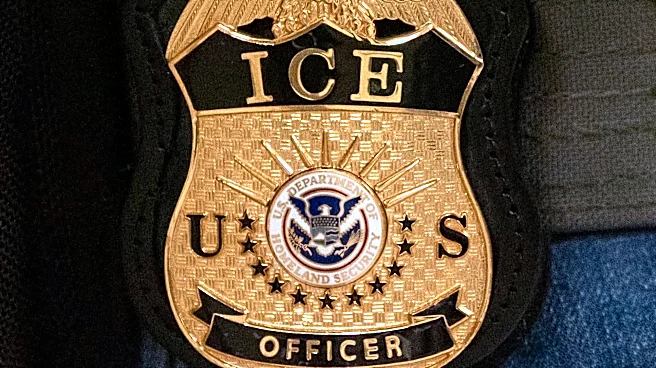
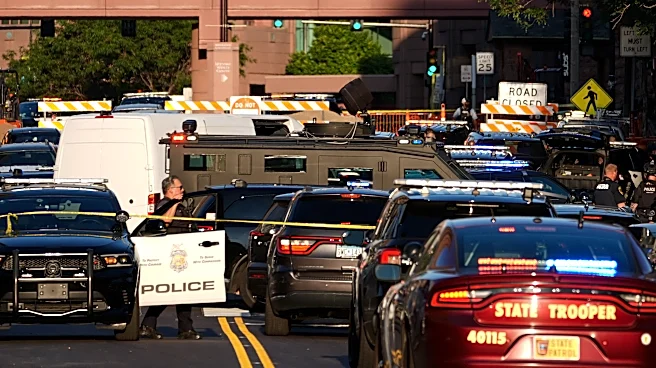
Immigration and Customs Enforcement (ICE) officer Christian Castro has been indicted by a federal grand jury for making false statements to the FBI regarding a shooting incident in Minneapolis on January
14. Castro had previously claimed he was ambushed and attacked by three individuals with a snow shovel and broom handle, leading him to fire a defensive shot that wounded Julio C. Sosa-Celis in the leg. However, a federal indictment, which remains sealed but reportedly charges Castro with six counts of making false statements, indicates that Castro fabricated this account. Video evidence contradicted Castro's claims, showing that he was not hit and fired his weapon through a closed door after Sosa-Celis and another man, Alfredo A. Aljorna, had retreated into their home. The Department of Homeland Security (DHS) initially defended Castro's actions, but later acknowledged that video evidence revealed untruthful statements. Federal prosecutors in Minnesota had considered more serious civil rights charges but, for now, the indictment is limited to false statements.
Why It's Important?
This indictment is significant as it marks a rare instance of a federal agent being charged in federal court for actions during an immigration operation, specifically Operation Metro Surge. It raises serious questions about accountability within federal law enforcement agencies and the initial narratives provided by government bodies like the DHS. The fact that the DHS initially defended Castro's actions, and even embellished his story, before video evidence disproved it, highlights potential issues with transparency and the immediate defense of officers without full investigation. This case could impact public trust in federal agencies and their handling of use-of-force incidents. It also underscores the critical role of independent investigations and video evidence in ensuring justice and holding officers accountable for their actions and statements, especially when they involve potentially unjustified use of force against civilians.
What's Next?
Christian Castro has been suspended without pay by the Department of Homeland Security. He turned himself in to federal authorities in Texas and was released on a $75,000 unsecured bond with GPS monitoring, scheduled to appear in Minnesota federal court on September 18. While the federal case focuses on false statements, federal prosecutors are reportedly still investigating the shooting and have not ruled out adding civil rights charges. Hennepin County Attorney Mary Moriarty has also filed state-level charges against Castro, including four counts of second-degree assault and one count of falsely reporting a crime. However, Castro's extradition to Minnesota for these state charges has been complicated by Texas Governor Greg Abbott's refusal to approve the extradition request. The federal case will likely take precedence, but the state charges remain active. The outcome of these legal proceedings will determine the extent of Castro's accountability for both his alleged lies and the shooting incident.
Beyond the Headlines
This case delves into the complex interplay between law enforcement narratives, official agency defense, and the undeniable truth revealed by objective evidence like video footage. The initial, unquestioning defense of Castro by the DHS, and even the embellishment of his story by then-DHS Secretary Kristi Noem, points to a systemic issue where agencies may prioritize protecting their personnel over immediate transparency and truth-seeking. This reflex can severely damage public trust and fuel perceptions of impunity within federal law enforcement. The internal dispute within the Justice Department, where a prosecutor reportedly objected to limiting charges to false statements, further highlights the ethical dilemmas and pressures involved in prosecuting federal agents. This incident could serve as a catalyst for re-evaluating protocols for investigating use-of-force incidents, emphasizing the need for immediate, unbiased review, and potentially leading to reforms in how federal agencies communicate about such events to the public.