




What's Happening?
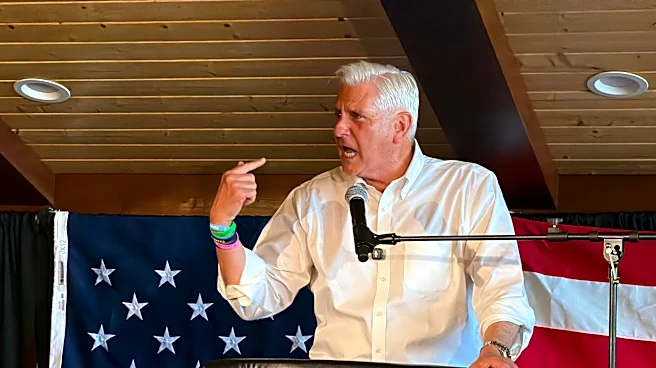
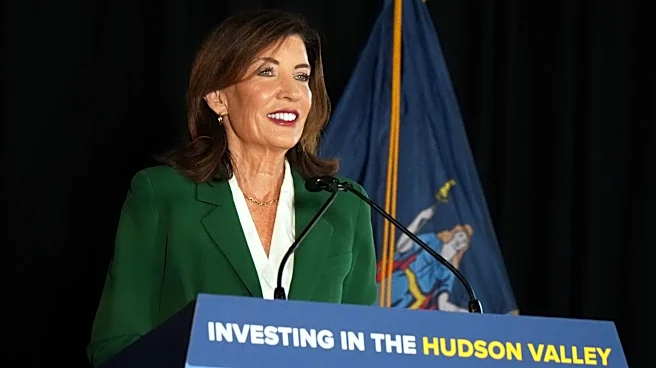
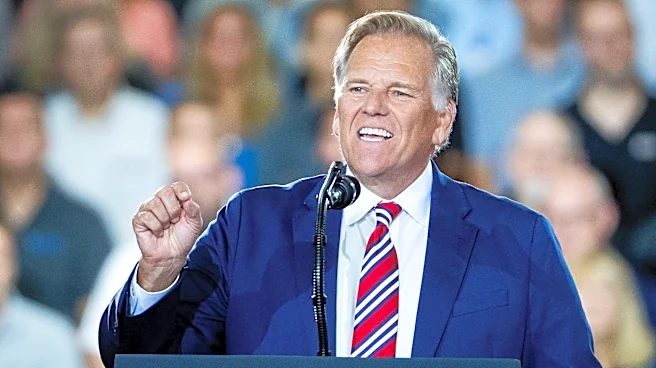
Bruce Blakeman, a Republican gubernatorial candidate and current Nassau County executive, has addressed his ex-wife Nancy Shevell-McCartney's $18,000 donation to Governor Kathy Hochul's campaign. The donation was made in May 2025, six months before Blakeman launched
his campaign against Hochul. Blakeman stated he was unaware of the donation and that his ex-wife is free to contribute to any campaign she chooses. He also commented on the 'surrealistic' nature of his ex-wife being married to Sir Paul McCartney, expressing an amicable relationship with McCartney and admiration for his music, citing 'Obla-Di Obla-Da' as his favorite Beatles song. Shevell-McCartney has a history of donating to both Republican and Democratic campaigns, including a $3,000 donation to Republican Joe Lhota's mayoral campaign in 2013 and serving on the Metropolitan Transportation Authority board after being appointed by former Republican Governor George Pataki.
Why It's Important?
This situation highlights the complex interplay of personal relationships and political affiliations, particularly when individuals with public profiles are involved. The donation from Blakeman's ex-wife to his political opponent, while made before his campaign announcement, could be perceived in various ways, potentially influencing public opinion or campaign narratives. It also underscores the financial aspects of political campaigns and the legal boundaries surrounding donations. The mention of Sir Paul McCartney, a global music icon, adds a unique cultural dimension to the story, drawing broader public interest and potentially diverting attention from the core political issues. The fact that Shevell-McCartney has supported both parties in the past suggests a non-partisan approach to her political contributions, which could be seen as a reflection of individual choice rather than a direct political maneuver against her ex-husband.
What's Next?
Blakeman has indicated he will not dwell on the donation, suggesting he intends to focus on his gubernatorial campaign. The story may continue to be a talking point in political discussions, especially given the high-profile individuals involved. As the gubernatorial campaign progresses, it remains to be seen if this past donation will be brought up by opponents or if it will fade from public discourse. The amicable relationship between Blakeman and McCartney, despite their differing political views, could serve as a model for civility in a politically charged environment, or it could be scrutinized further for any potential underlying tensions. The public and media will likely continue to monitor the dynamics between these figures as the election cycle unfolds.
Beyond the Headlines
Beyond the immediate political implications, this story touches on the broader theme of personal and public lives intersecting, especially for those in the public eye. The 'surrealistic' feeling Blakeman described regarding his ex-wife's marriage to a Beatle speaks to the often unexpected turns life can take, even for prominent figures. It also subtly highlights the independence of individuals within families, where political and personal choices may diverge. The story could spark conversations about the nature of celebrity influence in politics, even indirectly, and how personal connections can become subjects of public interest. Furthermore, it offers a glimpse into the personal lives of political figures, reminding the public that they, too, navigate complex family dynamics alongside their professional responsibilities.