
What's Happening?
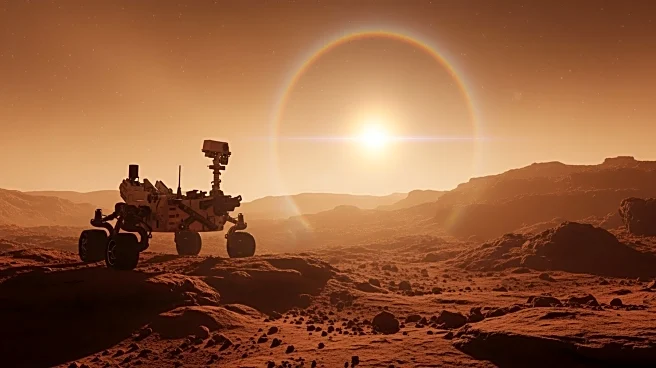
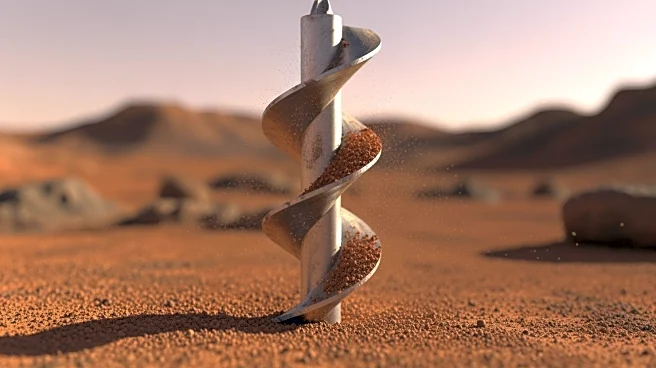
NASA's Curiosity rover has been actively conducting scientific experiments on Mars, focusing on drilling and analyzing samples from the Nevado Sajama region. The rover recently completed its 45th drill hole, with the CheMin and SAM instruments analyzing the samples.
The team is utilizing an extended planning period to maximize scientific output, including ChemCam's seven LIBS measurements and Mastcam's 360-degree stereo mosaic. The rover is also monitoring the Martian environment for dust and atmospheric changes as the planet enters its dusty season.
Why It's Important?
The ongoing research by Curiosity provides critical insights into Mars' geological history and current environmental conditions. Understanding the planet's past climate and potential habitability is essential for future manned missions and the search for life. The data collected helps scientists refine models of Mars' atmosphere and surface processes, contributing to broader planetary science and exploration goals. The findings could also inform the development of technologies for sustaining human life on Mars.
What's Next?
As Curiosity continues its mission, the team plans to further analyze the collected samples and environmental data. The rover's activities will support upcoming missions, including the Mars Sample Return mission, which aims to bring Martian samples back to Earth for detailed study. Continued monitoring of the Martian atmosphere and surface conditions will aid in preparing for future human exploration.