





What's Happening?
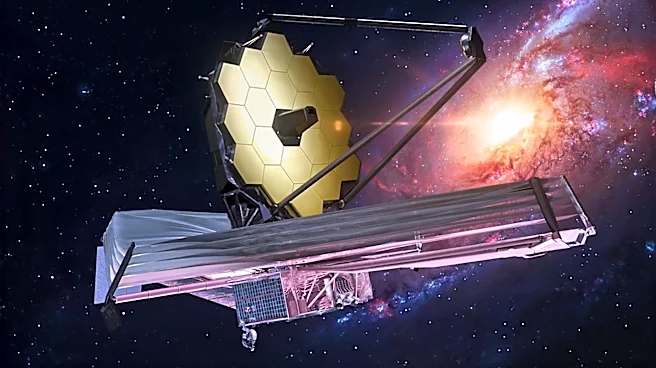
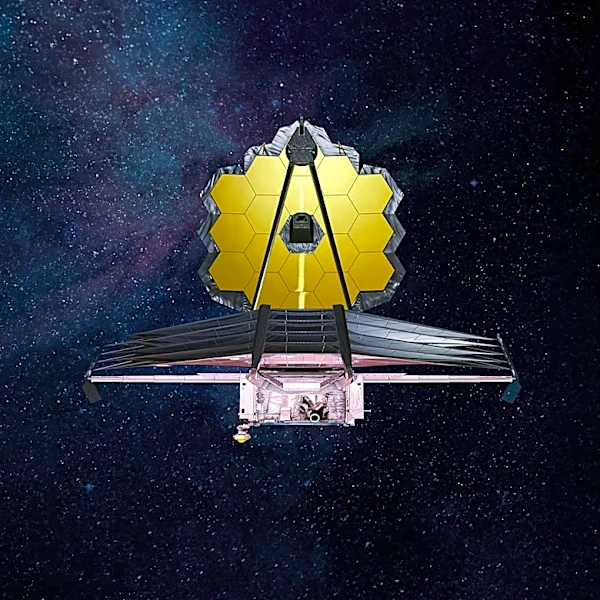
NASA's James Webb Space Telescope has captured new, high-resolution images of the Lion Nebula, also known as NGC 2392. This planetary nebula, previously imaged by the Hubble Space Telescope in 2000, has been observed in greater detail thanks to Webb's
advanced imaging capabilities. The nebula, which resembles a lion's face, is formed by the remnants of a dying star. The Webb telescope's infrared imaging has revealed intricate structures within the nebula, including compact dust clumps and ionized gas. These observations provide insights into the nebula's formation and the ongoing changes driven by the central star's radiation.
Why It's Important?
The detailed images from the James Webb Space Telescope offer significant advancements in our understanding of planetary nebulae and the life cycles of stars. By studying the Lion Nebula, scientists can gain insights into the processes that govern the formation and evolution of such cosmic structures. The ability to observe these phenomena in high resolution allows researchers to explore the complex interactions between stellar remnants and their surrounding environments. This knowledge contributes to broader astronomical research, enhancing our comprehension of the universe's structure and the lifecycle of stars.
What's Next?
The James Webb Space Telescope will continue to observe and capture images of various celestial objects, providing valuable data for ongoing research. Scientists will analyze the new images of the Lion Nebula to further understand the dynamics of its dust and gas structures. Future observations may focus on other planetary nebulae and similar cosmic phenomena, expanding our knowledge of the universe. The continued operation of the Webb telescope promises to yield more groundbreaking discoveries in the field of astronomy.