
What's Happening?
Syrian President Ahmed al-Sharaa has embarked on a diplomatic tour in the Gulf and Europe to strengthen Syria's regional ties and position the country as a strategic corridor linking Central Asia, the Gulf,
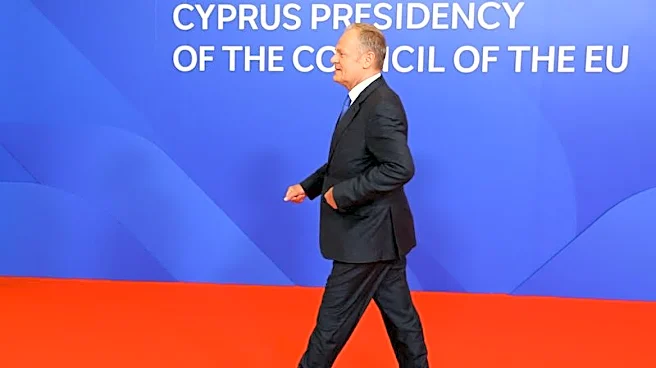
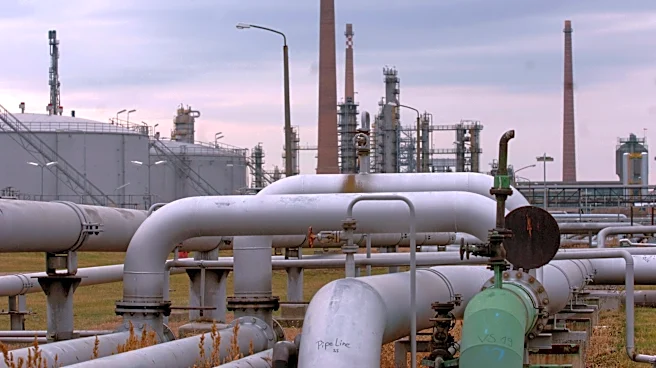
and Europe. During his visit, al-Sharaa met with leaders from the United Arab Emirates, Saudi Arabia, and Qatar, discussing regional developments and bilateral cooperation. The Syrian leader also attended meetings in Cyprus with European officials, presenting a vision of regional connectivity. This diplomatic effort comes amid increased interest in land connections between the Middle East and Europe due to the ongoing Iran crisis. Syria aims to secure oil contracts and trade deals, leveraging its strategic location to attract investment and support post-conflict recovery.
Why It's Important?
Syria's diplomatic outreach highlights its ambition to play a pivotal role in regional geopolitics, particularly as a hub for trade and energy routes. By strengthening ties with Gulf states and the European Union, Syria seeks to attract investment for infrastructure rebuilding and economic growth after years of conflict and sanctions. The potential for new trade routes and energy partnerships could significantly impact the region's economic landscape, offering opportunities for reconstruction and development. However, Syria's efforts to align with Gulf states and the EU may also influence its relations with traditional allies like Iran and Russia, potentially reshaping regional alliances.
What's Next?
Syria's ongoing diplomatic efforts are likely to continue as it seeks to solidify its role as a regional connector. The success of these initiatives will depend on the country's ability to navigate complex geopolitical dynamics and secure tangible economic benefits. Future developments may include further negotiations with Gulf states and European partners, as well as potential infrastructure projects to enhance connectivity. The international community will closely monitor Syria's actions, as they could have significant implications for regional stability and economic integration.