




What's Happening?
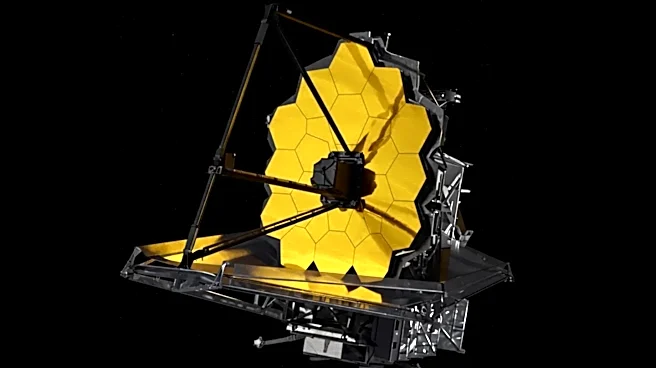
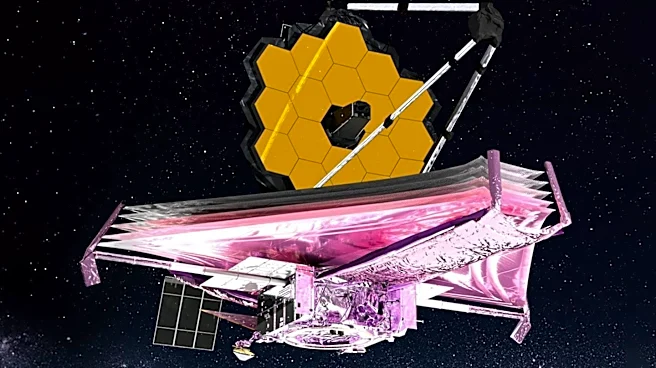
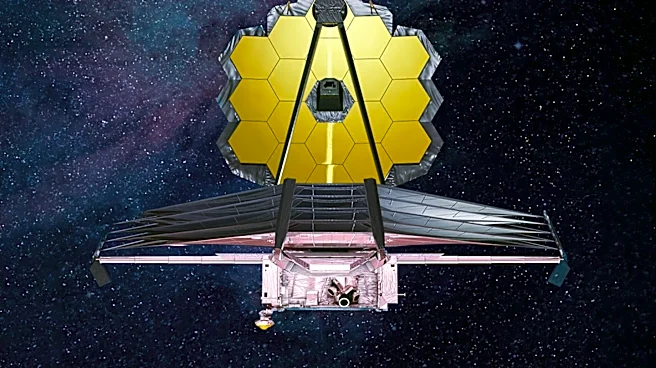
The James Webb Space Telescope (JWST) has provided new insights into the feeding mechanisms of supermassive black holes, revealing a self-regulating cycle of feeding and fasting. This discovery highlights how black holes, located at the centers of large
galaxies, consume surrounding gas and dust, sometimes acting as engines for active galactic nuclei (AGN). These black holes can expel matter in jets, which may drive gas and dust out of their host galaxies, halting star formation. The JWST's observations suggest that expelled gas cools and forms filaments that eventually fall back to the black hole, restarting the feeding process. This cycle of feasting and fasting has been elusive, but the JWST's findings offer a clearer understanding of this dynamic interaction.
Why It's Important?
The findings from the JWST are significant as they provide a deeper understanding of how supermassive black holes grow and influence their host galaxies. This self-regulating cycle could explain how these cosmic giants reached their massive sizes so quickly after the Big Bang, challenging previous theories that suggested such growth should take much longer. The ability of black holes to recycle matter and energy could have profound implications for our understanding of galaxy evolution and the role of black holes in the universe. This research could also impact future studies on the formation and development of galaxies, offering new perspectives on cosmic history.
What's Next?
Further research is expected to focus on confirming the connection between the observed filaments and the feeding cycles of supermassive black holes. Scientists may use the JWST and other telescopes to study additional galaxies and black holes to see if similar mechanisms are at play. This could lead to a broader understanding of the role of black holes in galaxy formation and evolution. Additionally, these findings may inspire new theoretical models to explain the rapid growth of supermassive black holes in the early universe.
Beyond the Headlines
The discovery of this self-regulating cycle in black holes could have broader implications for our understanding of cosmic recycling processes. It highlights the complex interactions between black holes and their environments, suggesting that these entities are not just destructive forces but also play a crucial role in the cosmic ecosystem. This research may also influence the way we think about energy and matter distribution in the universe, potentially leading to new insights into the fundamental processes that govern cosmic structures.