










What's Happening?
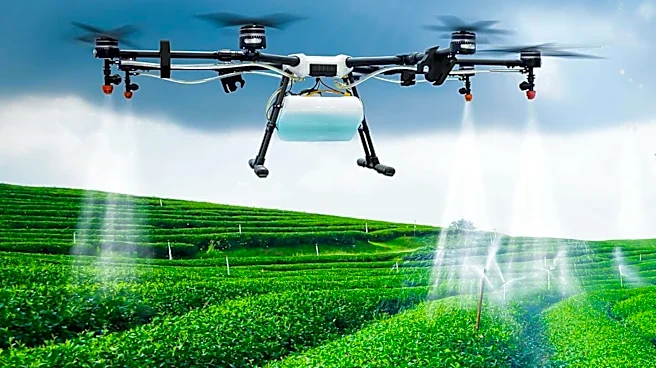
Dr. Jitendra Singh, Union Minister of State for Science & Technology, highlighted the potential of Artificial Intelligence (AI) to significantly boost India's agriculture economy. Speaking at the 17th Agriculture Leadership Conclave 2026 in New Delhi,
he emphasized that AI could add approximately Rs 70,000 crore to the annual agricultural economy. The Minister underscored the role of agri-startups in driving this transformation, suggesting that the next wave of India's startup revolution should emerge from the agricultural sector. The conclave, supported by the Ministry of Food Processing Industries, brought together various stakeholders to discuss the future of Indian agriculture under the theme 'Feeding the Future.' Dr. Singh stressed the importance of integrating emerging technologies into agriculture to enhance productivity and sustainability, citing the success of initiatives like the CSIR Aroma Mission.
Why It's Important?
The integration of AI in agriculture is crucial for India's economic growth and sustainability. By leveraging AI, the agricultural sector can improve efficiency, reduce costs, and increase productivity, directly impacting farmers' incomes and creating employment opportunities in rural areas. This technological shift is essential for India to remain competitive globally and achieve long-term food security. The focus on agri-startups also highlights a shift towards innovation-driven growth, which can transform agriculture into a major source of entrepreneurship and wealth creation. The government's support for such initiatives indicates a strategic move to harness technology for economic development, aligning with India's broader goals of achieving net-zero emissions and sustainable growth.
What's Next?
The future of India's agriculture will likely see increased collaboration between government, industry, and startups to implement AI-driven solutions. This could involve developing new policies to support technological adoption and creating platforms for knowledge exchange among stakeholders. As AI technologies become more accessible, there will be a push to educate farmers and rural entrepreneurs on their benefits, potentially through digital platforms and multilingual content. The success of initiatives like the CSIR Aroma Mission could serve as a model for other regions, encouraging the adoption of similar projects across the country. Continued investment in research and development will be critical to sustaining this momentum and ensuring that technological advancements translate into tangible economic benefits for the agricultural sector.
Beyond the Headlines
The emphasis on AI in agriculture also raises questions about the ethical and social implications of technology-driven farming. As AI becomes more prevalent, issues such as data privacy, the digital divide, and the displacement of traditional farming practices may arise. Ensuring that technological advancements are inclusive and accessible to all farmers, regardless of their socio-economic status, will be a significant challenge. Additionally, the focus on sustainability and climate resilience highlights the need for environmentally friendly practices that do not compromise agricultural productivity. Balancing technological innovation with ethical considerations will be crucial for the long-term success of AI in agriculture.