




What's Happening?
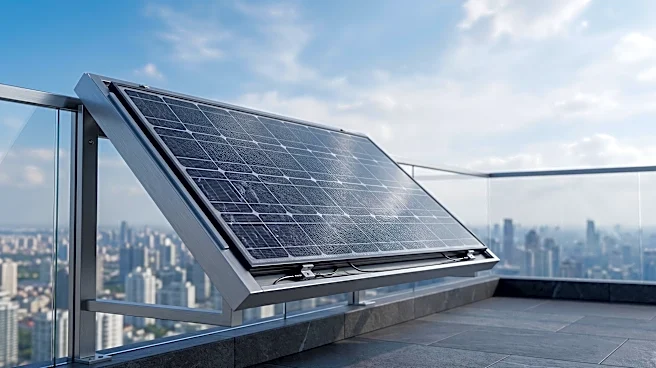
Norwegian lawmakers are advocating for the legalization of plug-in solar panels and batteries, aiming to provide households with a means to lower utility bills and maintain essential services during emergencies. The proposal, put forth by six members
of Norway’s Green Party (MDG) for the 2025-2029 term, seeks to remove existing restrictions and bureaucratic hurdles that currently prohibit these small, low-cost systems. An 800-watt setup, estimated at around NOK 5,000 (approximately $532), is suggested as a viable option for keeping food and water hot during a crisis. The MDG argues that legalization would simplify consumer access to safe products, bolster landlords' rights to generate their own electricity, and eliminate taxes on clean energy production. This initiative marks a significant potential shift in Norway's clean energy policy, aligning it with other European nations like Germany, the United Kingdom, and Switzerland where balcony solar systems are already permitted.
Why It's Important?
This legislative push in Norway highlights a growing international trend towards decentralized energy solutions and energy independence at the household level. For the U.S., this development could serve as a case study for similar policy considerations, particularly in states or regions prone to power outages or experiencing high energy costs. The emphasis on plug-in systems that connect to standard grounded sockets simplifies installation and reduces reliance on complex grid infrastructure, potentially making renewable energy more accessible to a broader population. If successful, Norway's experience could influence U.S. policy discussions regarding consumer-friendly renewable energy incentives, grid resilience, and emergency preparedness strategies. The removal of taxes on clean energy production, as proposed, could also inspire similar fiscal policies in the U.S. aimed at accelerating renewable energy adoption and stimulating economic activity in the green technology sector.
What's Next?
The proposal is currently a first step, formally placing the issue before the Norwegian parliament. The MDG, while a center-left party, is not part of Norway's current governing coalition, meaning the proposal's passage is not guaranteed. However, it requests the Norwegian government to complete several actions by the end of 2027. These include allowing qualifying plug-in solar and batteries to use ordinary grounded sockets, developing a national guide for safe use and purchase, and establishing a digital registration system for these devices. Additionally, the lawmakers have called for an investigation into a VAT exemption for private-household solar cell systems and batteries by October 1, 2027. The progress of this proposal will depend on parliamentary debate and potential cross-party support, with safety standards, consumer rights, and grid regulations being key areas of focus.
Beyond the Headlines
The broader implications of this proposal extend beyond immediate energy savings and emergency backup. It touches upon the concept of energy democracy, empowering individual citizens to become active participants in energy generation rather than solely consumers. This shift could foster greater public engagement with renewable energy technologies and increase energy literacy. Ethically, it raises questions about the right to self-sufficiency in energy and the role of government in facilitating or hindering such initiatives. Culturally, widespread adoption of plug-in solar could normalize renewable energy in daily life, accelerating its integration into societal norms. Furthermore, the focus on small-scale, distributed energy resources could contribute to a more resilient and decentralized energy grid, less vulnerable to large-scale failures and external threats, a model that could have significant long-term security implications for nations like the U.S.