







What's Happening?
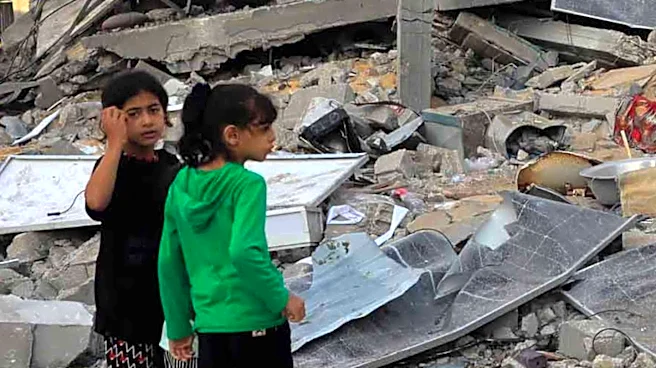
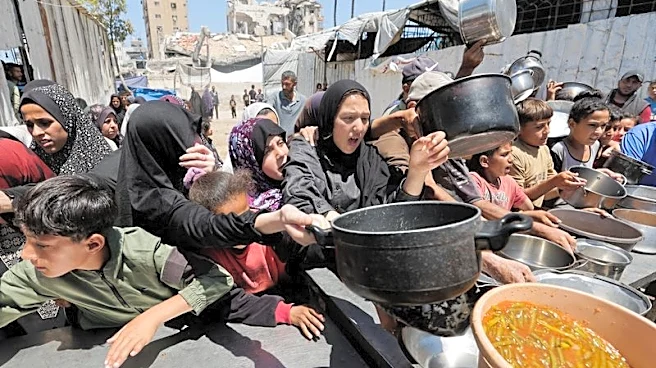
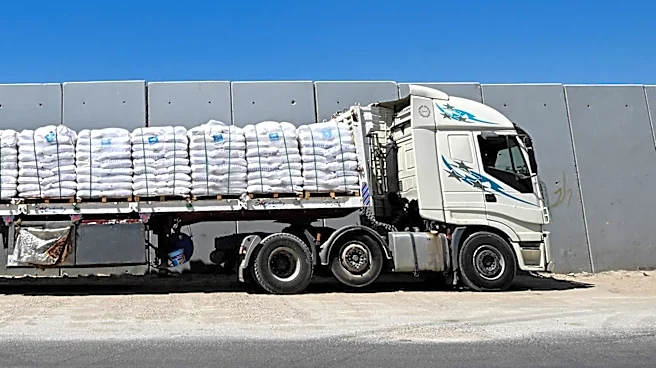
A report by the Integrated Food Security Phase Classification (IPC) indicates that while the hunger crisis in Gaza has eased since last year, the situation remains precarious. Improved aid deliveries and reduced fighting following a ceasefire have lowered
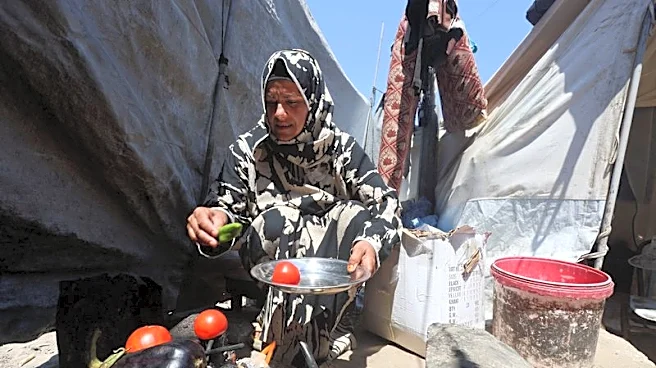
acute malnutrition rates, particularly among children. However, the IPC warns that the recovery is fragile and could quickly unravel if humanitarian assistance declines. The report highlights that 1.2 million people in Gaza experienced acute food insecurity between April and June, with projections indicating a potential increase to 1.4 million by the end of the year if aid is not sustained.
Why It's Important?
The slight improvement in Gaza's food security situation demonstrates the impact of sustained humanitarian aid. However, the potential for a renewed surge in hunger underscores the importance of continued international support and access to aid. The fragile recovery highlights the ongoing vulnerability of Gaza's population, particularly children, to malnutrition and its long-term effects. The situation calls for urgent action to ensure that recent gains are not lost and that the humanitarian needs of Gaza's residents are met.