


What's Happening?
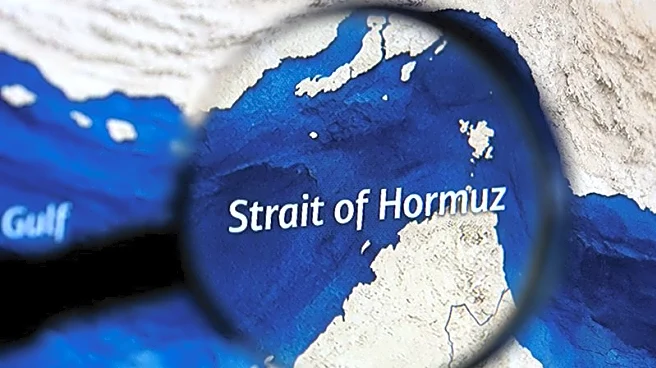
Global markets are experiencing significant disruptions due to ongoing tensions in the Strait of Hormuz, a critical chokepoint for global oil and LNG flows. Rising oil prices and supply uncertainties have led to foreign investors withdrawing approximately
$50 billion from Asian equities, impacting the economic outlook of energy-importing economies in the region. The situation is particularly severe in India, where discussions between U.S. President Trump and Indian Prime Minister Narendra Modi have highlighted the challenges posed by tightening LNG supplies and rising import costs. Market predictions suggest that the Strait of Hormuz may remain constrained for an extended period, exacerbating supply disruptions and forcing traders and policymakers to adapt to a tighter supply environment.
Why It's Important?
The disruption in the Strait of Hormuz is not just an isolated oil supply issue but a broader macroeconomic event with far-reaching implications. Higher energy prices are affecting commodities, driving capital outflows, and reshaping trade balances, raising concerns about economic growth across multiple regions. The situation underscores the vulnerability of global markets to geopolitical tensions and the interconnectedness of energy supply chains. For investors, the prolonged instability in the Strait of Hormuz signals a shift from short-term volatility to longer-term adjustments, impacting equities, currencies, and global growth expectations. The potential for further escalation in the region remains a significant risk factor for global economic stability.
What's Next?
If the current conditions persist, Europe may soon face energy shortages, as warned by Shell's CEO. The continent's reliance on seaborne LNG, following the loss of Russian pipeline gas, makes it particularly vulnerable to disruptions in global shipping routes. Policymakers and traders are likely to continue monitoring the situation closely, with diplomatic efforts potentially playing a crucial role in preventing further escalation. The ongoing tensions highlight the need for diversified energy sources and more resilient supply chains to mitigate the impact of geopolitical disruptions on global markets.