







What's Happening?
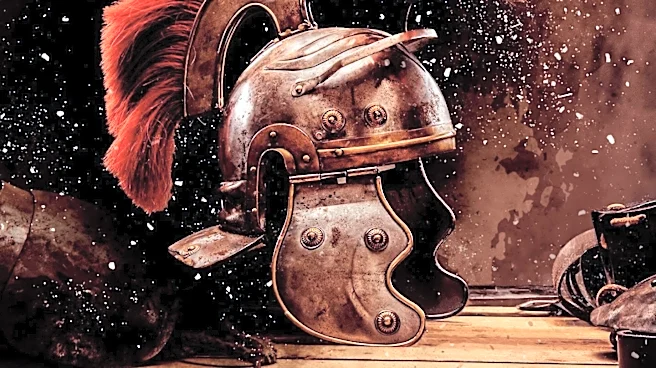
During the 3rd century AD, the equipment of Roman legionaries experienced substantial changes, moving away from traditional designs towards more pragmatic and protective gear. The iconic lorica segmentata (plate armor) was gradually replaced by lorica hamata
(chainmail) and lorica squamata (scale armor), which became standard. Helmets evolved from the classical Galea to the Niederbieber helmet, offering enhanced protection for the neck and a deeper construction. The rectangular scutum (shield) was phased out in favor of the lighter and more versatile oval shield. Furthermore, the gladius, a short sword, was definitively replaced by the spatha, a longer sword suitable for both cavalry and infantry. These shifts were driven by the constant pressure of border conflicts, which prioritized protection and mobility over maintaining traditional military aesthetics. The changes also reflected a fading distinction between legionaries and auxilia, with soldiers adopting proven methods from the latter, such as scale armor, which offered excellent protection against projectiles from increasingly well-armed adversaries like the Sassanids.
Why It's Important?
The transformation in Roman military equipment during the Late Principate highlights a critical period of adaptation and pragmatism within the Roman Empire. This shift underscores the empire's response to evolving threats and the necessity of prioritizing battlefield effectiveness over historical tradition. The adoption of more cost-effective and easily repairable armor like chainmail and scale armor, as opposed to the complex lorica segmentata, reflects a strategic decision to manage resources more efficiently in a time of constant conflict. The move to longer swords (spatha) and more protective helmets indicates a direct response to changes in enemy tactics and weaponry, emphasizing increased reach and better defense against arrows and projectiles. This period of military evolution was crucial for Rome's ability to maintain its borders and survive during one of its most turbulent historical eras, demonstrating how military innovation can be a key factor in geopolitical stability and survival.
What's Next?
While the source details historical changes, the implications for understanding military evolution suggest that armed forces continually adapt to new threats and technological advancements. Future military developments will likely continue this trend, with ongoing research into materials science for lighter, stronger armor, and advancements in weaponry to counter emerging threats. The historical precedent set by the Roman Empire's adaptation indicates that military organizations must remain flexible and willing to abandon outdated practices in favor of more effective solutions. This continuous cycle of innovation and adaptation is essential for maintaining military superiority and national security in a dynamic global landscape. Modern defense strategies often draw parallels from historical military transformations, emphasizing the importance of readiness and technological edge.
Beyond the Headlines
The evolution of Roman military equipment in the Late Principate offers insights into the broader societal and economic pressures faced by the empire. The shift away from expensive and complex armor like the lorica segmentata towards more practical alternatives suggests economic strain and the need for resource optimization. This pragmatic approach reflects a society under duress, where efficiency and survival took precedence over traditional grandeur. Furthermore, the adoption of equipment previously associated with auxiliary forces indicates a blurring of social distinctions within the military, highlighting a more unified and less class-stratified fighting force. This period of transformation underscores how military needs can drive significant cultural and economic shifts, influencing everything from industrial production to social hierarchies. The Roman experience serves as a historical case study for how external pressures can force profound internal changes within large, complex organizations.