






What's Happening?
Senator Chris Murphy and Representative Ro Khanna have suggested a shift in political character assessment, focusing on candidates' anti-oligarch stances rather than personal flaws. This perspective is gaining traction among voters disillusioned by economic
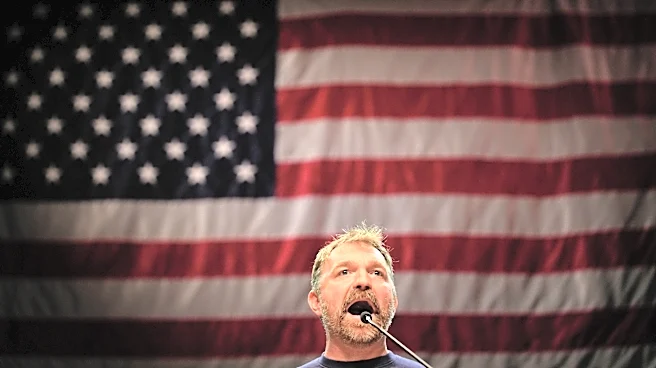
hardships and political corruption. The case of Graham Platner, a U.S. Senate candidate, exemplifies this trend as his anti-oligarch campaign maintains popularity despite personal controversies. This shift reflects a broader redefinition of political character, prioritizing policy over personal morality.
Why It's Important?
This shift in voter priorities could significantly impact U.S. political dynamics, challenging traditional party structures and candidate evaluations. If voters increasingly prioritize anti-corruption and economic policies over personal character, it could lead to the rise of more unconventional candidates and alter electoral strategies. The Democratic Party, in particular, may need to adapt to this new reality to maintain electoral viability, as traditional appeals to personal integrity may no longer suffice.
Beyond the Headlines
The evolving definition of political character could lead to a more materialist political landscape, where voters focus on systemic change rather than individual morality. This shift may challenge the media's role in shaping political narratives, as traditional character assessments become less relevant. It could also influence campaign strategies, with candidates emphasizing policy over personal image. The long-term implications may include a more diverse political field and increased voter engagement.