
What's Happening?
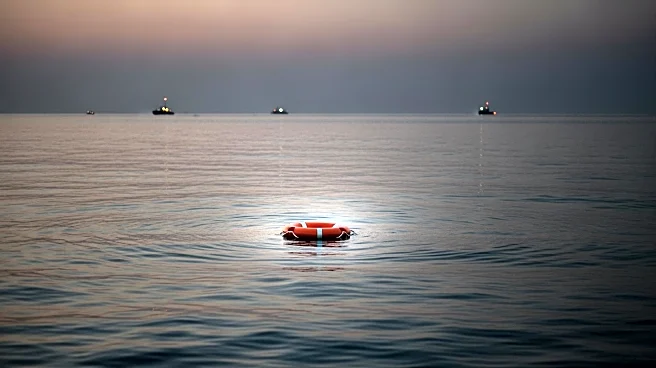
A ferry named Trisha Kerstin 3 sank off the coast of Basilan Province in the Philippines, resulting in at least 15 deaths and 28 people missing. The ferry, which departed from Zamboanga City with 332 passengers
and 27 crew members, was en route to Jolo, Sulu. Despite passing a pre-departure safety check, the vessel sank under calm conditions. The Philippine Coast Guard (PCG) responded quickly, deploying rescue teams and coordinating with local government and military assets. As of the latest reports, 317 individuals have been rescued, and search operations continue. The cause of the sinking remains unknown, and a full investigation will be conducted once rescue efforts conclude.
Why It's Important?
This incident underscores the ongoing challenges in maritime safety within the Philippines, a nation heavily reliant on water transport due to its archipelagic geography. The high volume of maritime traffic combined with light regulatory oversight often leads to such tragedies. The sinking highlights the need for improved safety protocols and stricter enforcement of maritime regulations to prevent future casualties. The event also draws attention to the broader issue of maritime safety in developing regions, where infrastructure and regulatory frameworks may lag behind the demands of growing populations and economies.
What's Next?
Following the completion of rescue operations, a comprehensive marine casualty investigation will be launched to determine the cause of the sinking. This investigation could lead to recommendations for policy changes or improvements in safety standards. The incident may prompt the Philippine government to review and potentially strengthen maritime safety regulations and enforcement mechanisms. Additionally, there may be calls for international assistance or collaboration to enhance maritime safety infrastructure and training in the region.