



What's Happening?
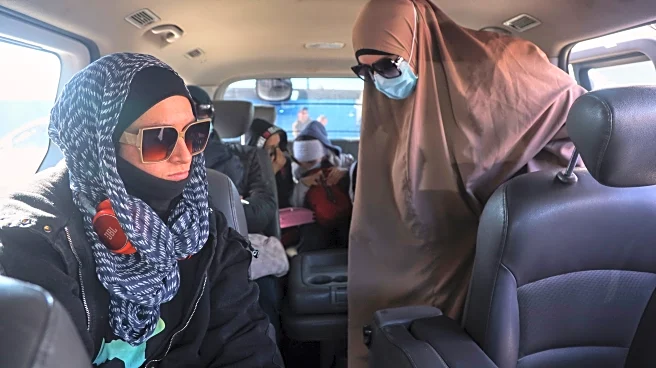
The U.S. military has finalized the transfer of thousands of suspected Islamic State fighters to the Iraqi government. This move is seen as a precursor to the potential withdrawal of American troops from Syria in the coming months. The transfer aims to alleviate
the burden on U.S. forces in Syria and shift the responsibility of detaining these suspects to Iraq. However, there are concerns about the Syrian government's ability to prevent a resurgence of ISIS in the region. The decision aligns with President Trump's broader strategy to reduce U.S. military presence in the Middle East, despite ongoing instability in Syria.
Why It's Important?
The transfer of ISIS suspects to Iraq is significant as it marks a step towards reducing U.S. military involvement in Syria, a region fraught with conflict and geopolitical tension. This move could impact U.S. foreign policy and military strategy, potentially altering the balance of power in the Middle East. The withdrawal of American troops might lead to a power vacuum, raising concerns about the resurgence of ISIS and other extremist groups. Additionally, it places a greater burden on Iraq to manage and secure these detainees, which could strain its resources and stability.
What's Next?
As the U.S. prepares for a potential troop withdrawal from Syria, the focus will likely shift to ensuring that Iraq can effectively manage the transferred ISIS suspects. The international community may need to provide support to Iraq to prevent any security lapses. Meanwhile, the U.S. will have to navigate the geopolitical implications of its reduced presence in Syria, including managing relationships with allies and adversaries in the region. The situation will require careful monitoring to prevent a resurgence of ISIS and maintain regional stability.