


What's Happening?
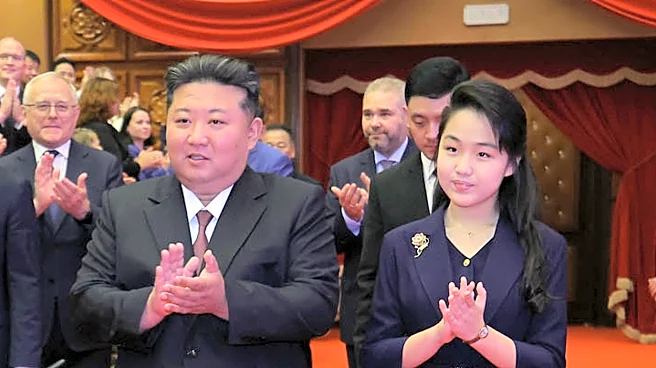
South Korea's National Intelligence Service (NIS) has informed lawmakers that Kim Jong Un's teenage daughter, Kim Ju Ae, is close to being designated as North Korea's future leader. This development comes as North Korea prepares for its largest political
conference of the year, where Kim Jong Un is expected to outline major policy goals and consolidate his power. Kim Ju Ae, believed to be around 13 years old, has been increasingly visible in public, attending significant events such as military parades and weapons tests alongside her father. Her presence at these events has fueled speculation about her future role in North Korea's leadership. The NIS has noted a shift in its assessment, now describing her as being in the 'successor-designate stage,' a significant change from previous evaluations.
Why It's Important?
The potential designation of Kim Ju Ae as a future leader marks a significant moment in North Korea's political landscape, as it would extend the Kim family dynasty into a fourth generation. This move could have profound implications for the region's stability and international relations, particularly with countries like South Korea and the United States. The succession plan may also impact North Korea's domestic policies and its approach to international diplomacy. The increased visibility of Kim Ju Ae suggests a strategic effort by Kim Jong Un to secure his family's legacy and maintain the regime's continuity. This development could influence North Korea's future policy directions and its interactions with global powers.
What's Next?
The upcoming Workers' Party Congress in North Korea may provide further insights into Kim Jong Un's succession plans. Observers will be watching for any formal announcements or subtle indications of Kim Ju Ae's role in the regime. The congress could also reveal new policy directions and strategies for North Korea's domestic and international agenda. Analysts suggest that if Kim Ju Ae is indeed being positioned as a successor, the signs may be subtle, such as changes in party rhetoric or symbolic gestures. The international community will likely monitor these developments closely, as they could affect diplomatic relations and regional security dynamics.