
What's Happening?
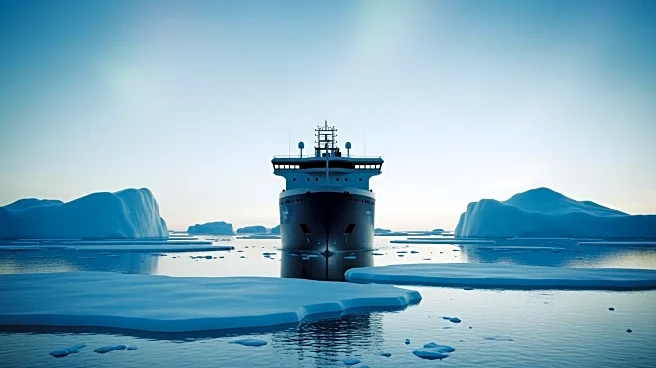
South Korea is advancing plans to initiate regular trans-Arctic shipping, aiming to become the first Western-aligned nation to do so. The government is prioritizing the development of operations to utilize
Russia's Northern Sea Route, enhancing South Korea's global trade capabilities. President Lee Jae-myung emphasized the strategic importance of the route, which could position South Korea as a competitor to China, already active in the region. The Ministry of Oceans and Fisheries, led by Acting Minister Kim Sung-bum, is spearheading the initiative, with a trial voyage planned for September. This voyage aims to reduce travel distance and time significantly, with a 5,000 YEU-class vessel making the journey from Busan to Rotterdam. However, challenges such as Western sanctions against Russia and increased insurance costs are acknowledged.
Why It's Important?
The development of Arctic shipping routes is significant for South Korea's economic strategy, potentially reducing shipping times and costs, thus enhancing competitiveness in global trade. By establishing a presence in the Arctic, South Korea could diversify its trade routes and reduce dependency on traditional shipping lanes. This move could also strengthen economic ties with Russia, despite geopolitical tensions. The initiative reflects a broader trend of countries seeking to capitalize on the melting Arctic ice to open new maritime routes, which could have substantial implications for global shipping dynamics and environmental considerations.
What's Next?
The next steps involve selecting a suitable vessel and negotiating with Russia for passage permits. The South Korean government plans to offer financial incentives to offset higher insurance costs and encourage participation from shipping companies. Successful implementation could lead to regular Arctic voyages, positioning South Korea as a key player in Arctic shipping. The outcome of negotiations with Russia and the response from the international community, particularly regarding sanctions, will be critical in determining the project's viability.