



What's Happening?
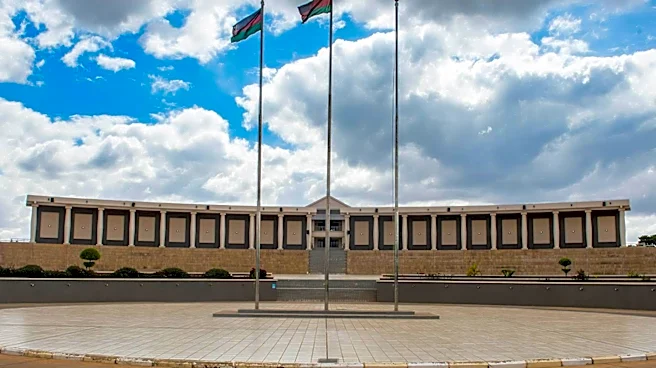
The Government of Malawi has formally granted a Letter of Authorisation (LoA) under Article 6 of the Paris Agreement for the Chitetezo Mbaula Cookstoves project. This authorization allows the project, developed by Self Help Africa with South Pole as the carbon
asset developer, to issue and transfer up to 315,000 tCO2eq of Mitigation Outcomes (ITMOs). These units are issued under Verra's VM0050 cookstove methodology, which is eligible for the Carbon Offsetting and Reduction Scheme for International Aviation (CORSIA) and carries the ICVCM Core Carbon Principles (CCP) label. This development, announced during COP31 in Antalya, signifies a move from rulebook negotiations to tangible delivery in the Article 6 carbon market.
Why It's Important?
This authorization is a significant milestone for the international carbon market, particularly for the operationalization of Article 6 of the Paris Agreement. It demonstrates a concrete example of how host nations can participate in international carbon markets on their own sovereign terms, channeling private capital into decarbonization efforts. For the U.S. and global industries, especially aviation, this increases the supply of high-integrity, CORSIA-eligible carbon credits, which are crucial for meeting emissions reduction obligations. The project addresses critical issues in Malawi, where over 90% of households rely on wood and charcoal for cooking, leading to deforestation, soil degradation, and indoor air pollution. By supporting the Chitetezo Mbaula Cookstoves project, the authorization provides a long-term revenue stream for climate adaptation and mitigation, while also empowering rural women producers and protecting forests.
What's Next?
The successful authorization of the Chitetezo Mbaula Cookstoves project is expected to encourage other host nations and project developers to pursue similar Article 6 agreements, further expanding the supply of ITMOs in the global carbon market. South Pole, as a key player, will continue to bridge the policy and technical gaps, assisting project partners in transitioning community initiatives into bankable carbon assets. The focus at COP31 on implementation suggests a growing emphasis on tangible, sovereign-backed emissions reductions, which could lead to more bilateral Article 6 agreements and ITMO transfers. This development is crucial for airlines seeking to meet their CORSIA obligations, as it bolsters a limited but growing active global pipeline of carbon credits.
Beyond the Headlines
The Malawi Article 6 authorization highlights the potential of carbon markets to drive sustainable development and address social inequalities. Beyond emissions reductions, the Chitetezo Mbaula Cookstoves project has direct benefits for public health, particularly for rural women and children who suffer from respiratory diseases due to indoor air pollution. It also promotes local manufacturing and community ownership, fostering economic empowerment and sustainable energy adoption. This model demonstrates how climate finance can be leveraged to achieve multiple Sustainable Development Goals simultaneously, moving beyond a purely environmental focus to encompass social and economic well-being. The success of such projects could inspire a more holistic approach to climate action, where carbon market mechanisms are integrated into broader development strategies, ensuring that climate solutions are equitable and inclusive.